
Dekker’s Modernist Corner: The Rise, Remaking, and Demise of 1203 Coal Ave SE
J. Padilla
3/18/20264 min read
Albuquerque on the Rise
In the 1950s, Albuquerque was being remade at a breathtaking pace as its population surged from about 97,000 residents to just over 200,000 by the end of the decade. New arrivals followed defense jobs, sunshine, and postwar prosperity to this growing city in the desert Southwest. Federal installations such as Kirtland Air Force Base and Sandia National Labs anchored a quickly diversifying economy that brought in educated middle‑ to upper‑class professionals. Residents enjoyed growing disposable income, fueling demand for shopping, services, and new housing.
Albuquerque expanded rapidly onto the East Mesa and into the Northeast Heights with large subdivisions like Hoffmantown and Snow Heights, as well as strategically placed neighborhood shopping centers, all supported by 157 miles of new roads built in the mid‑1950s. Homeownership and real estate values climbed throughout the decade, and the booming field of real estate needed new professional space to keep up with this growth.
Realtor Group's Growing Needs
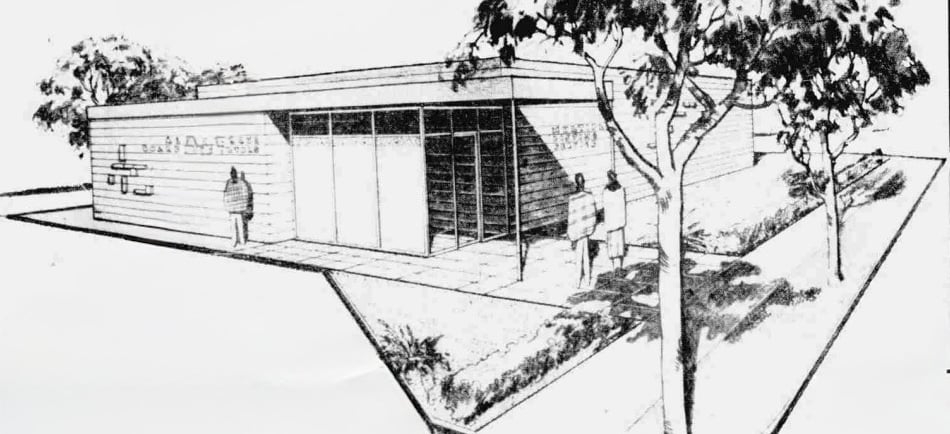
In 1956, architect Art Dekker and his colleagues from the firm Brittelle, Ginner & Dekker designed a new commercial building for the Albuquerque Board of Realtors and its Multiple Listing Service. The “contemporary” single‑story building measured about 1,775 square feet, housed offices, and was the first in the city to offer dedicated meeting spaces for its members. The project was initially budgeted at just under $21,000, but upon completion it was reported to have cost $35,000.
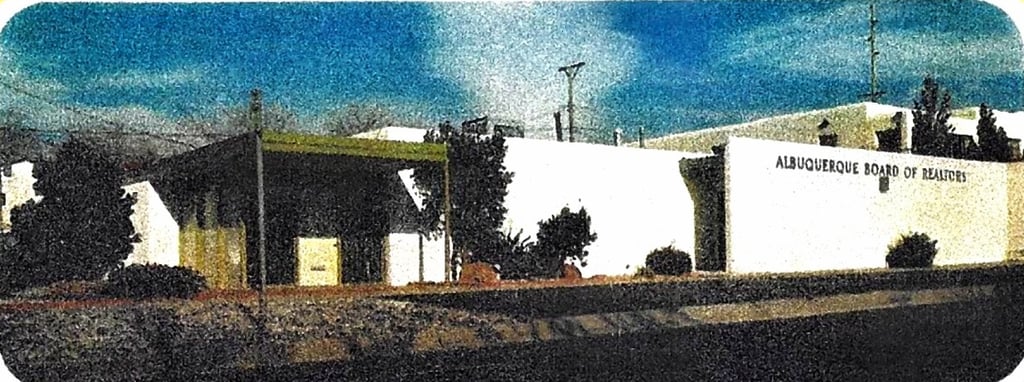
The original image of the south‑facing entrance, though poor in quality, still reveals clean lines, a restrained modernist expression, and subtle artistic treatments on the south‑ and west‑facing walls. It was modest in size but forward‑looking in character, very much in tune with midcentury Albuquerque’s optimism about professionalization and growth in the real‑estate industry.
A Modernist Grand Opening
The Albuquerque Board of Realtors celebrated its new home with a grand opening and open house in April 1957, welcoming several hundred visitors to tour the modern facility. An Albuquerque Journal advertisement promoting the event featured a striking rendering of the building and highlighted many of the players involved in bringing the project to life—though, curiously, not the architectural team itself.
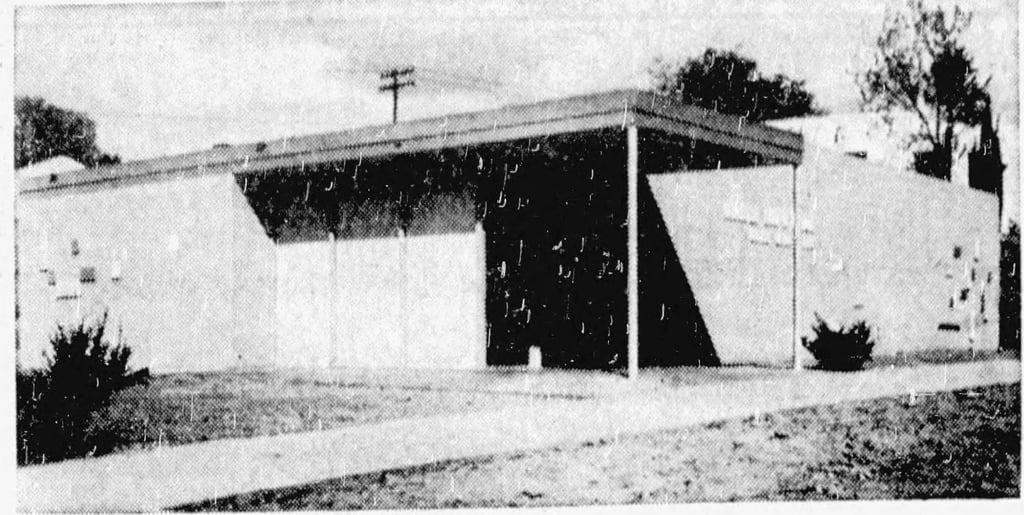
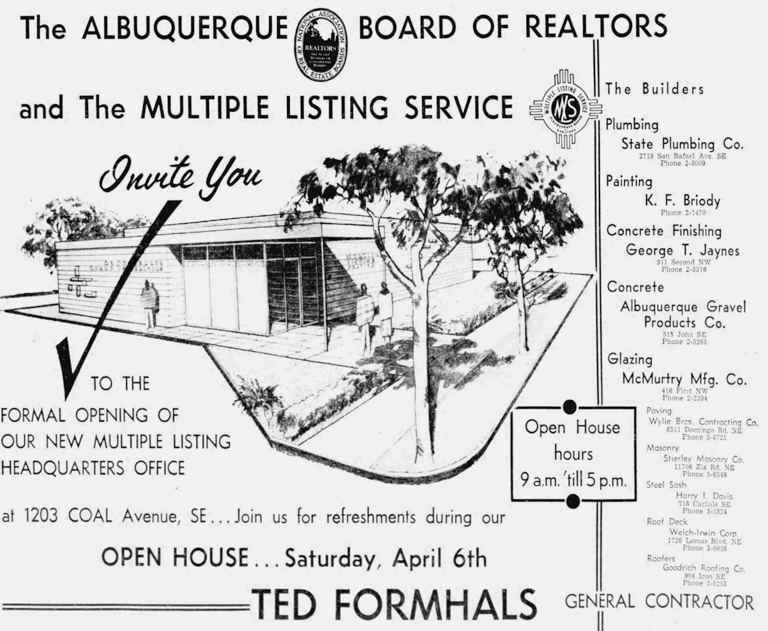
Newspaper clippings from the period do credit Brittele, Ginner & Dekker and specifically Art Dekker with the design, underscoring the building’s role as part of a broader wave of midcentury commercial architecture in the city. For “several decades” the Board operated out of 1203 Coal Ave SE, and a 1976 photograph shows that the original façade and modernist character remained largely intact some twenty years after completion.
Midcentury Lines to Pueblo Revival
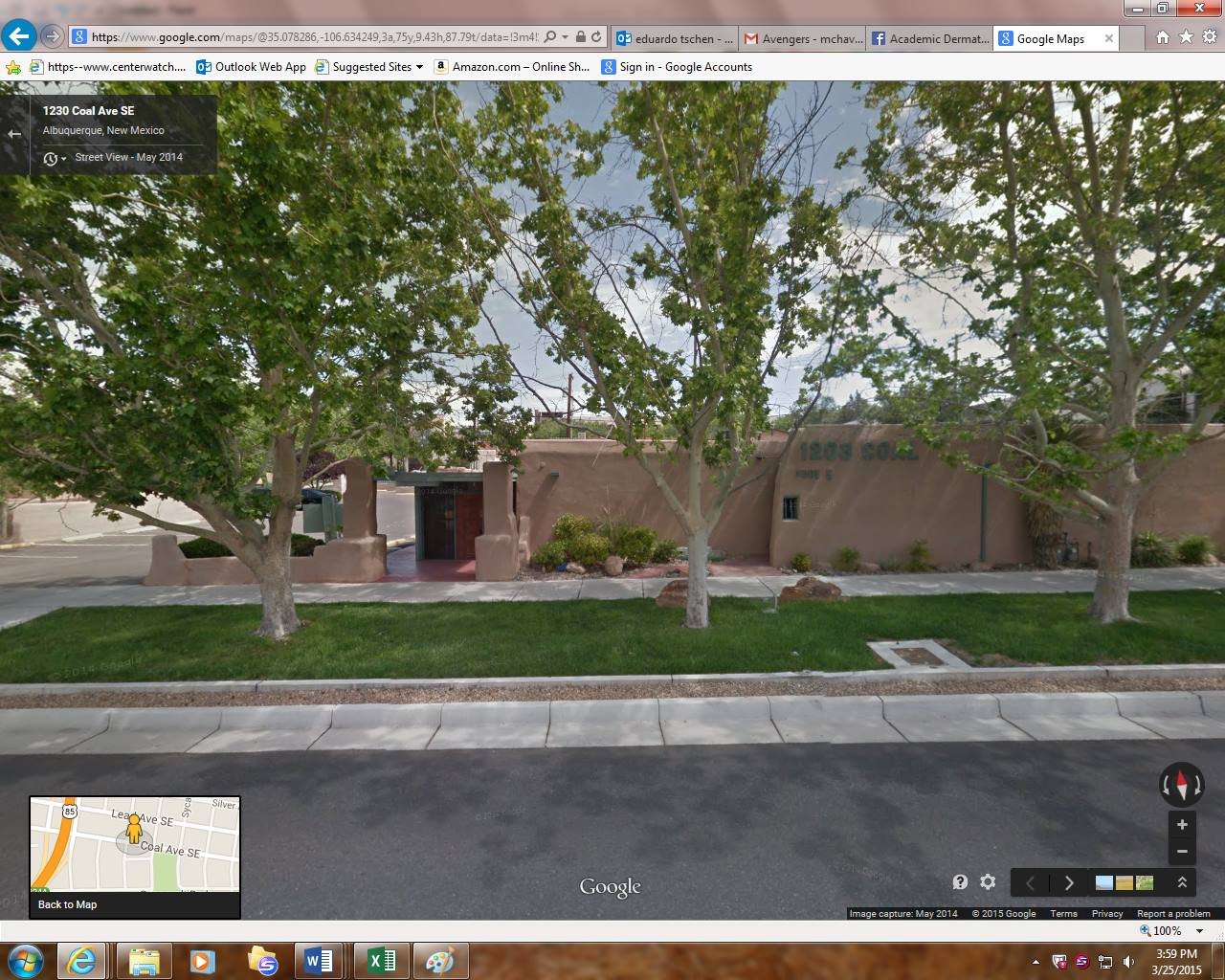
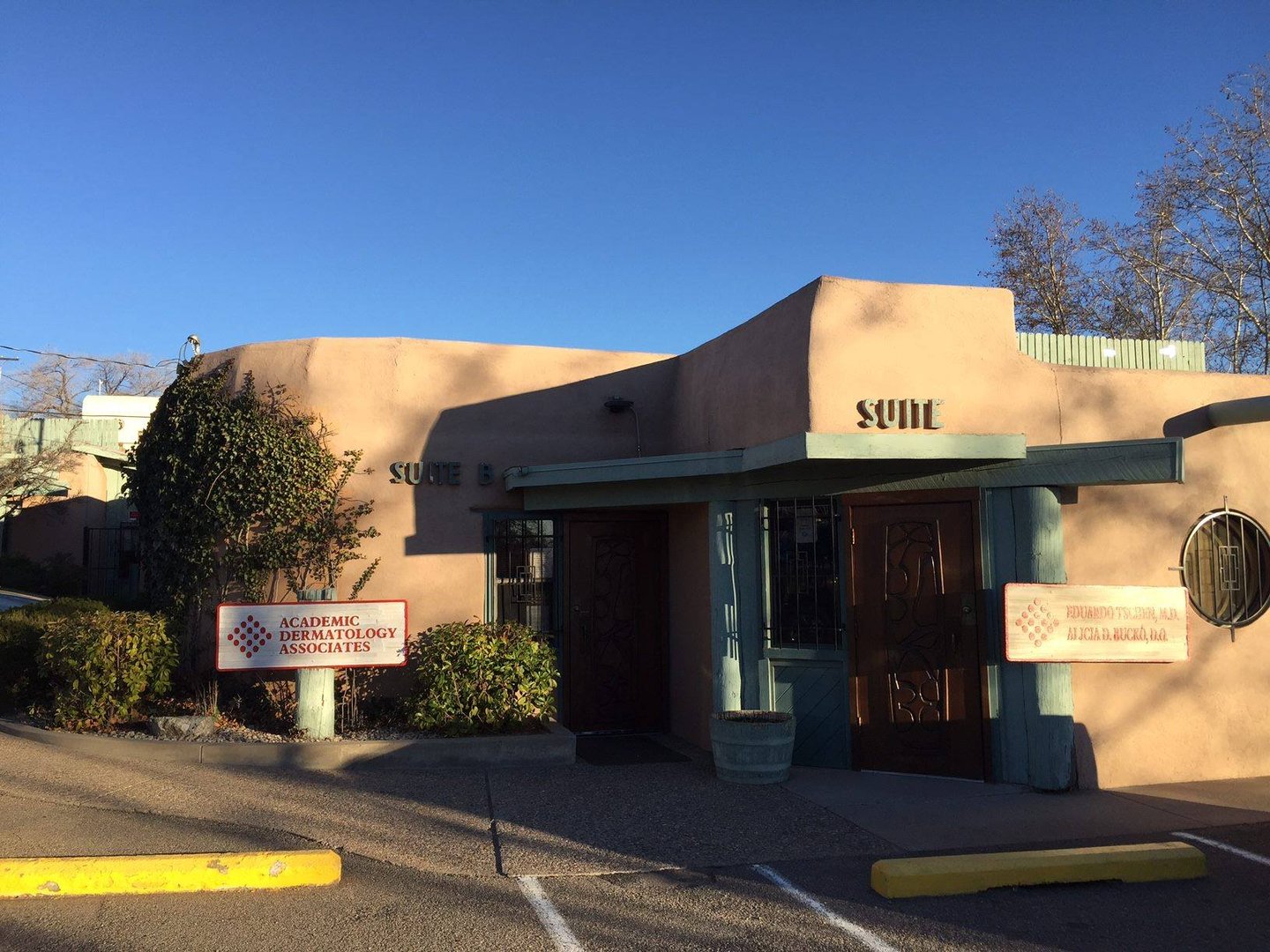
Sometime late in the 20th century, the building underwent a significant makeover that replaced its crisp midcentury lines with a more conventional Southwest, pueblo‑style appearance. Edges and corners were softened, walls thickened and stuccoed, a few round windows punctuated the façade, and heavy wood beam (vigas) details were added to align the structure with a familiar regional look.
This remodeled version of 1203 Coal Ave SE was home to Academy Dermatology Associates for almost two decades, demonstrating how adaptable the little former realtors' building was to changing tastes and commercial uses. Yet beneath the stucco and vigas, Dekker’s compact modernist shell quietly persisted, even as its architectural identity was increasingly obscured.
Demolition and an Uncertain Pause
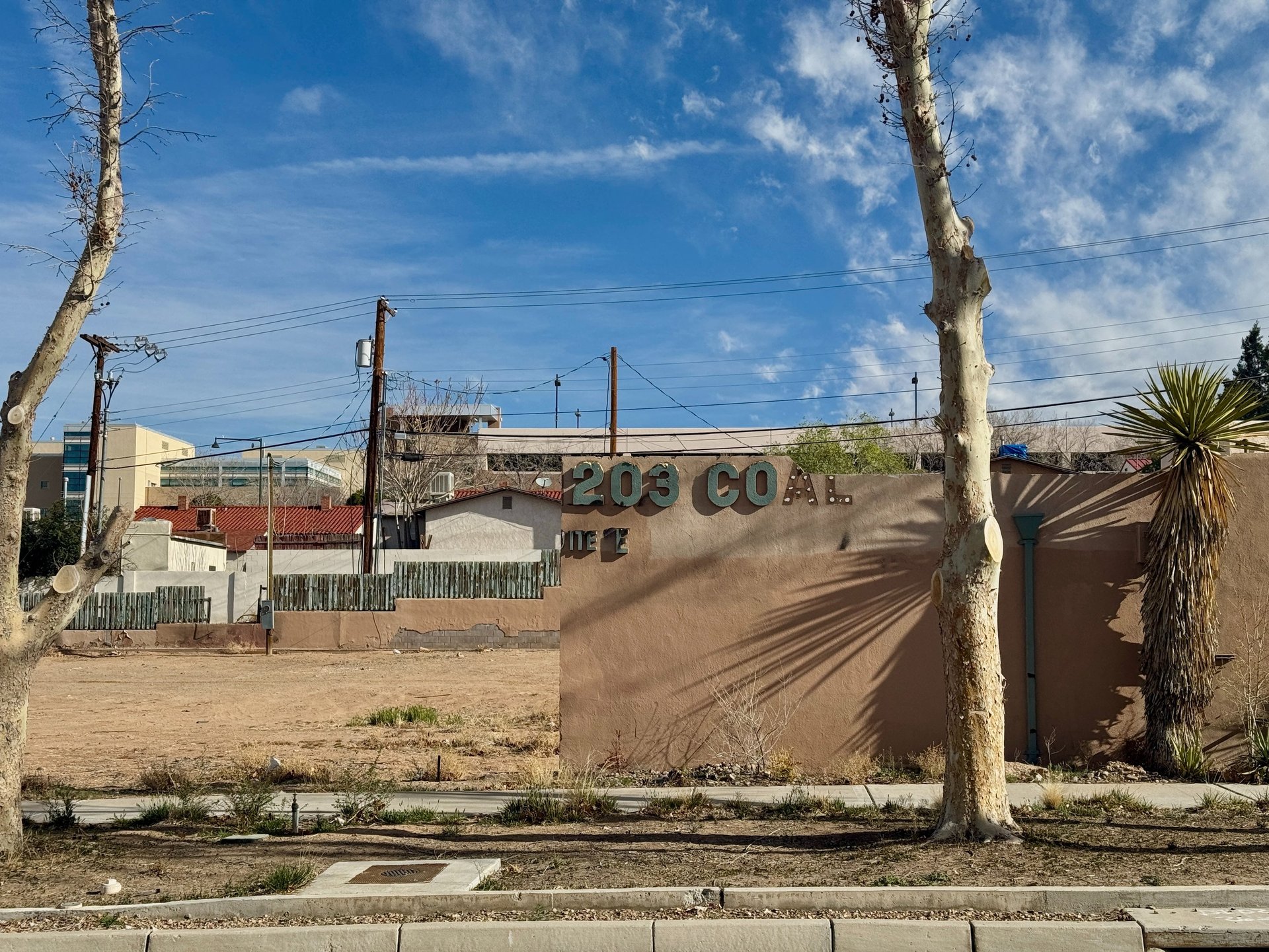
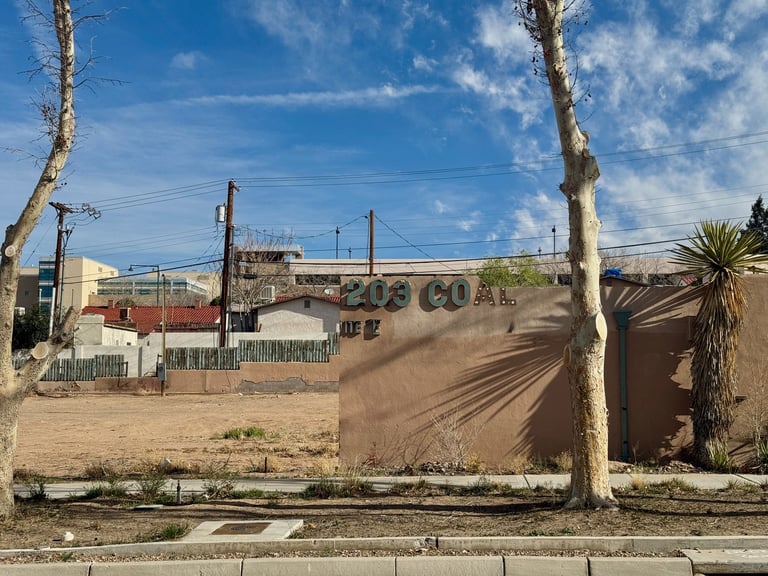
When I visited the site recently, I expected to find the former dermatology office standing vacant, perhaps awaiting its next tenant. Instead, the lot was completely empty; only a fragment of stucco wall with part of the street number remained to hint at what once occupied the corner.
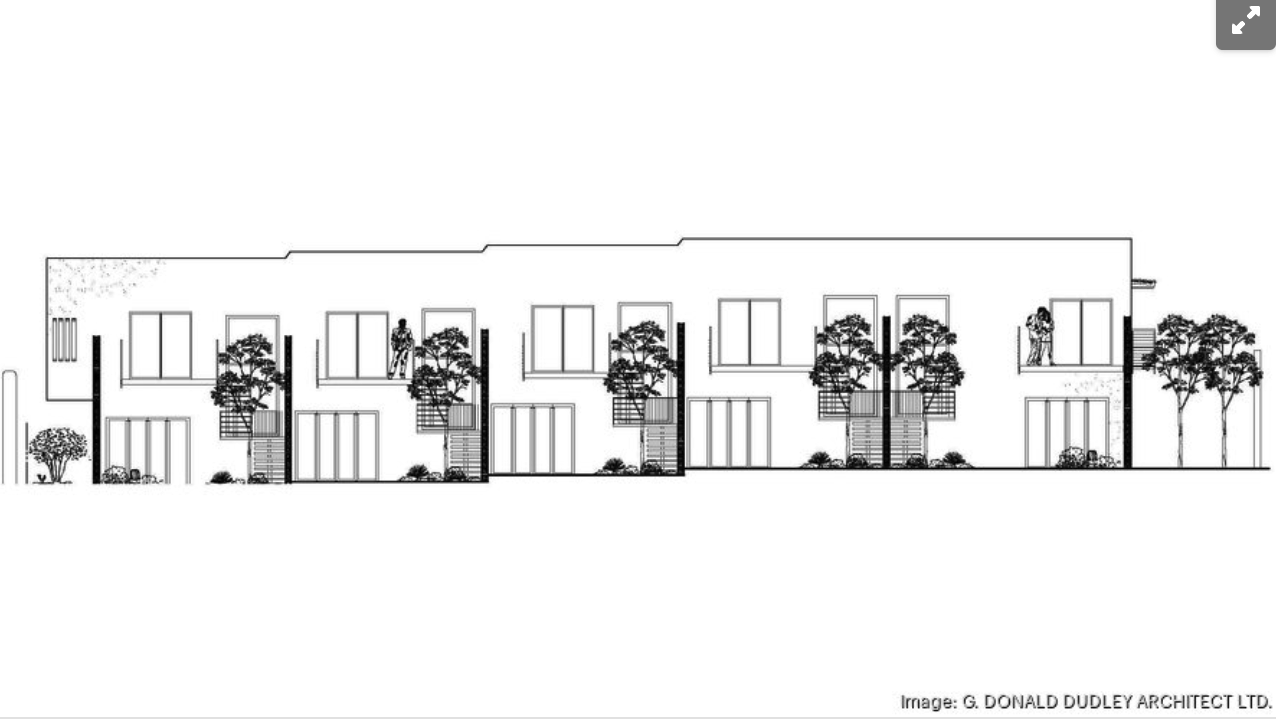
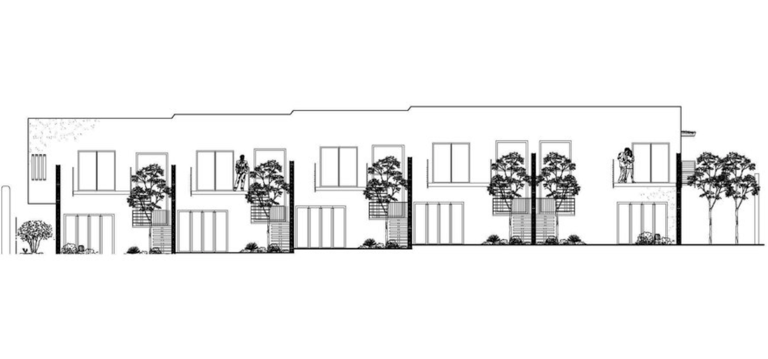
A search of recent records in the Albuquerque Business Journal revealed that a $2 million building permit for developer Don Dudley was approved in October 2024. The project, called Coal Flats, is planned as an 11,000 square‑foot apartment building aimed at healthcare workers employed at the many nearby medical facilities, and early renderings show a simple, contemporary façade stepping back from the street.
The Layers of a Small Corner Lot
From a crisp midcentury office for the Multiple Listing Service to a pueblo‑style medical building and now to a scraped lot awaiting Coal Flats, 1203 Coal Ave SE tells a compact story about how Albuquerque reinvents itself. Each layer, from Dekker’s understated modernism, the later Southwest makeover, and the forthcoming infill housing reflects changing ideas about professionalism, regional identity, and what a “useful” building should be.
Standing at that mostly empty corner today, it is easy to imagine the realtors in their new 1957 headquarters, the dermatology patients decades later, and the future residents who may soon call Coal Flats home—all of them part of a single, evolving narrative written into one small piece of the city’s fabric.
________________
Sources:
Albuquerque Tribune, 9/25/56, 11/20/56, 4/5/57
https://www.gaar.com/images/uploads/The_History_of_Albuquerque_-_Chapter_4_1.pdf
https://www.facebook.com/p/Academic-Dermatology-Associates-100049256535092/
Albuquerque Business First; https://www.bizjournals.com/albuquerque/news/2024/10/09/new-apartment-complex-targets-health-care-workers.html