
Redeeming Midcentury Design Hidden in a Forgotten Part of Albuquerque
J. Padilla
3/29/20264 min read
A Phased Approach to a New Church
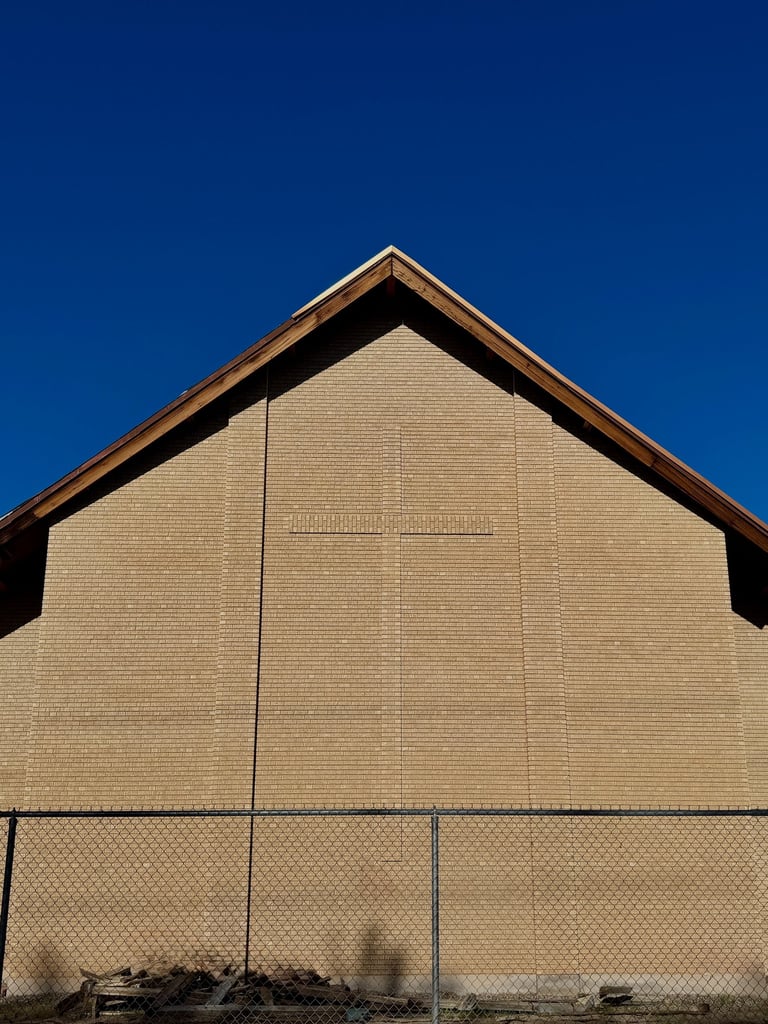
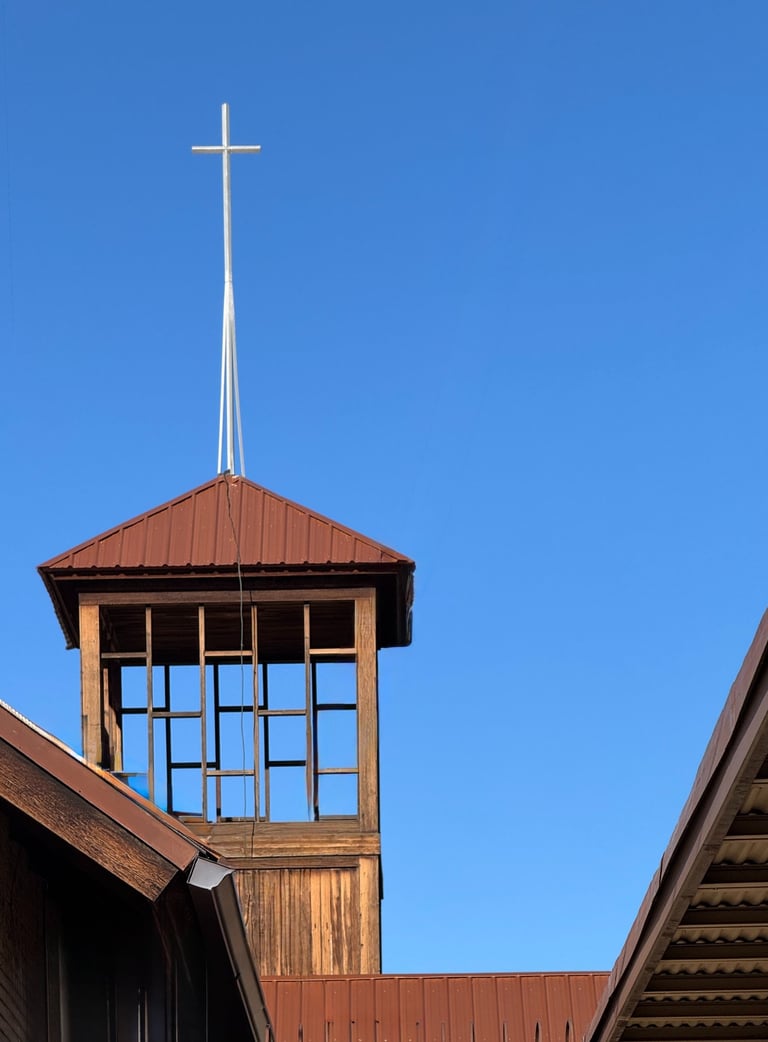
In my historical research on the architectural work of Mr. Art Dekker, I learned that his first firm, Brittelle, Ginner & Dekker, was behind the design of the main sanctuary and tower of Redeemer Lutheran Church at 220 Alvarado Dr. SE. The church began humbly enough, with a parish hall built in 1952 on the 1.5-acre site, which also served as the place of worship. By mid-1957, a $25,000 education wing for Sunday School had been completed, and that July, plans (below) were finalized for the sanctuary and tower addition that would give the building its defining shape.
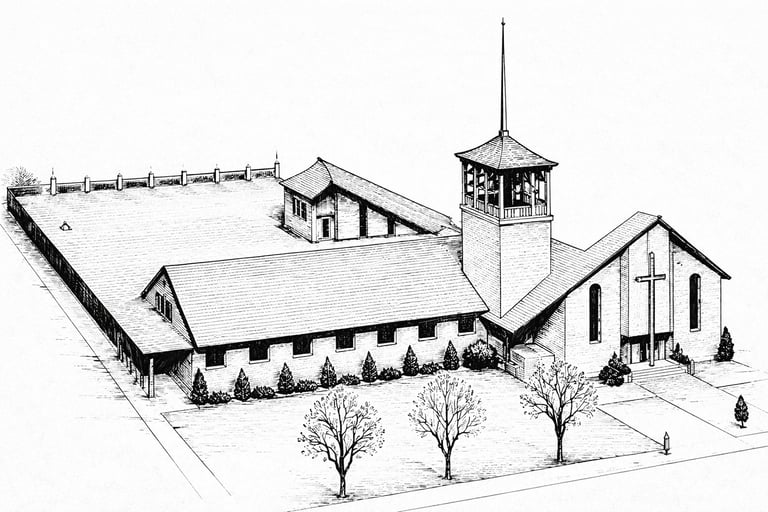
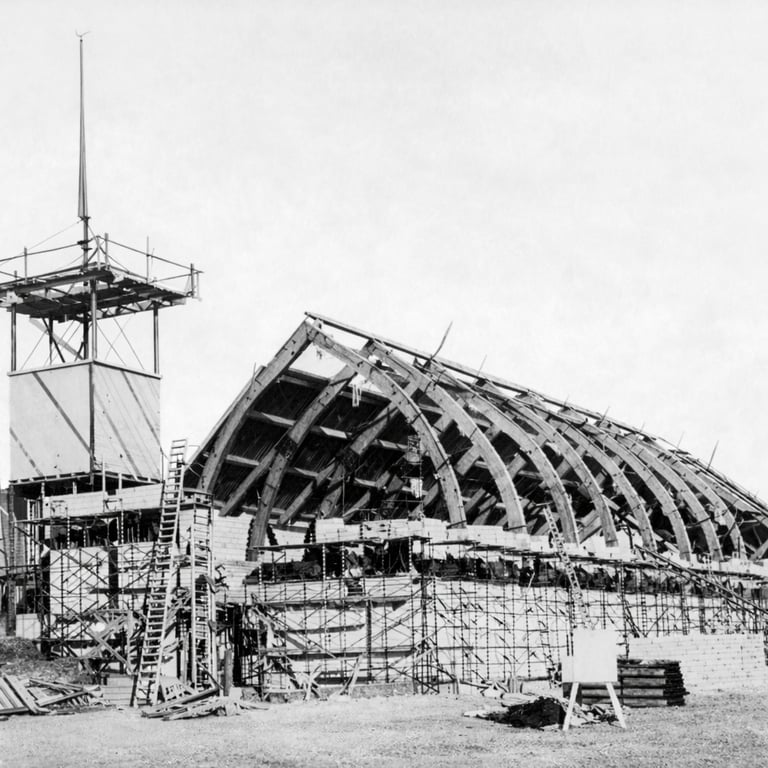
By fall 1957, Styron Construction Co. had begun work. The new $120,000 structure was described as being built of buff brick and redwood, and a November 1957 photo (below) shows the tower and redwood buttress-like supports already taking form. The sanctuary and tower were completed in March 1958 and dedicated on April 13 of that year.
A Chance Stop on Alvarado
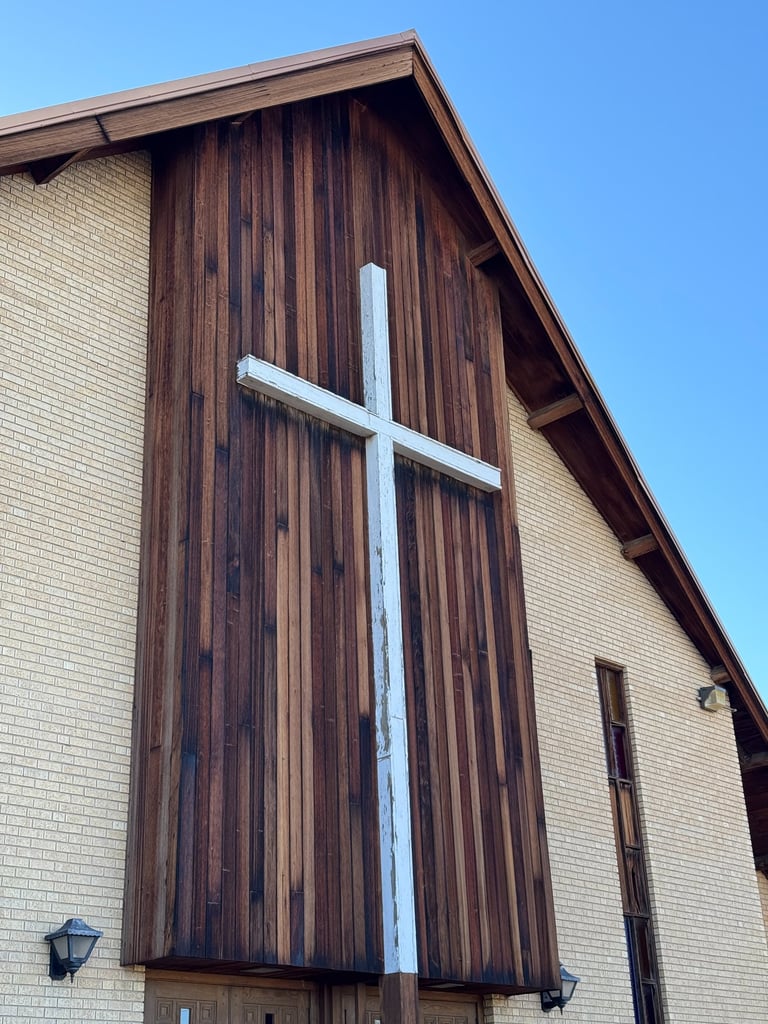
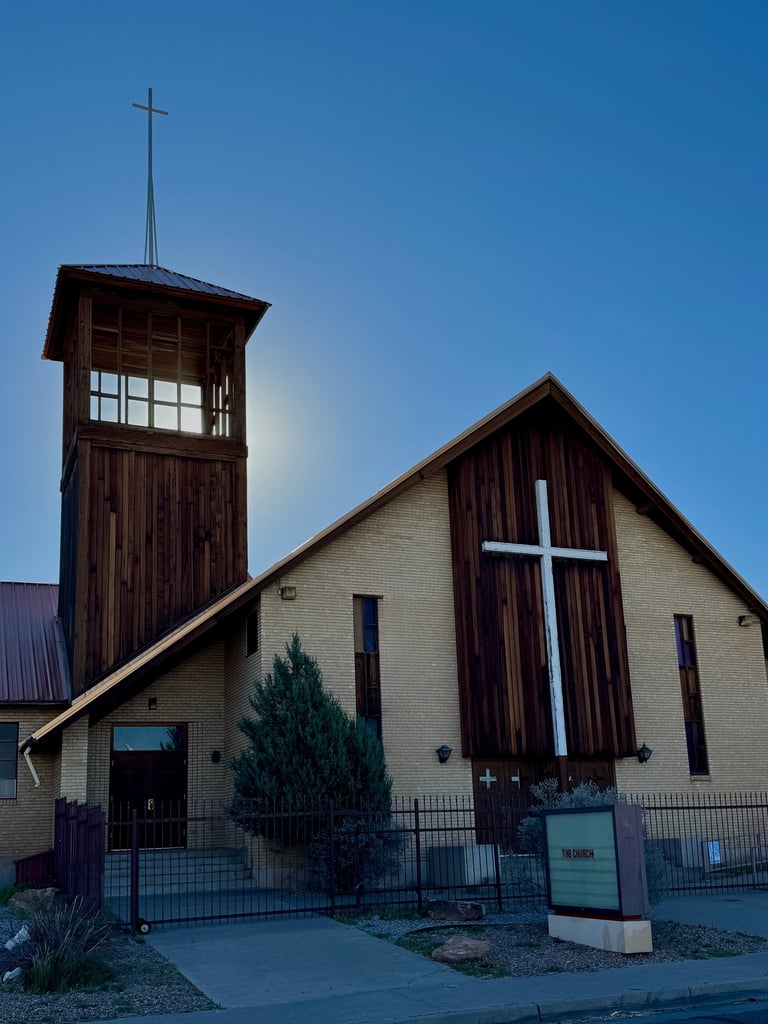
One morning, on a whim, I stopped at this address on Alvarado Drive, though I was already familiar with the area’s difficult reputation from the time I once worked a few blocks away in what is now called the “International District.” Still, I was pleasantly surprised to find the church standing there, solid and dignified, and seemingly in good condition. I parked, walked the grounds, and took in the building from every angle I could.
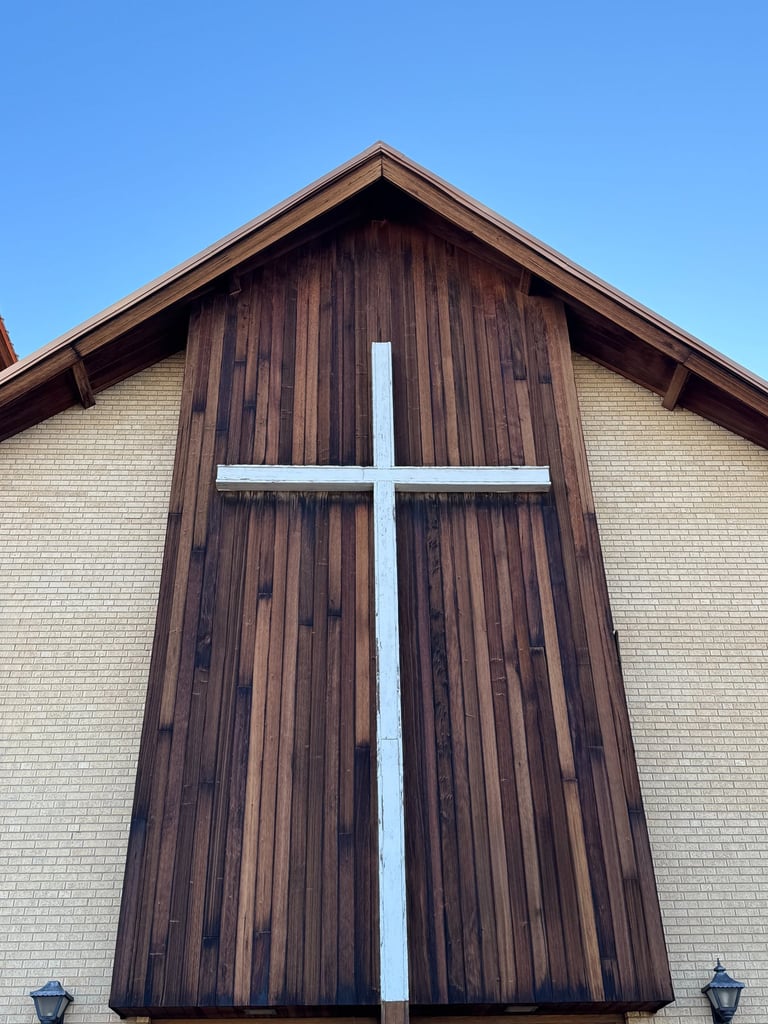
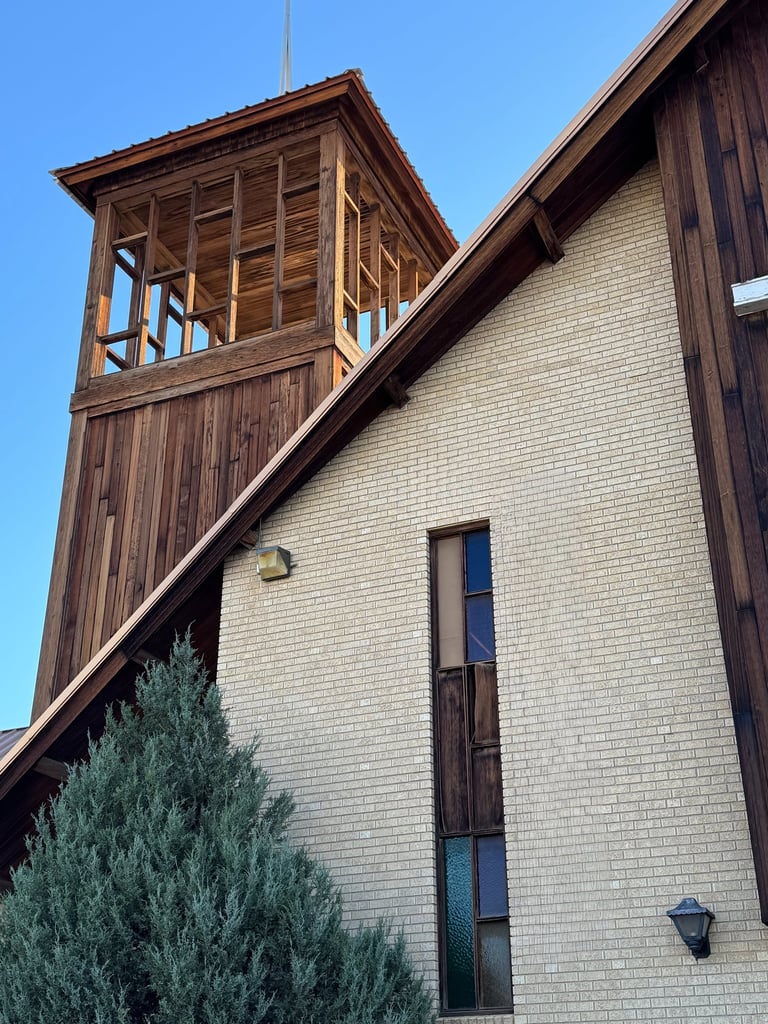
A Sanctuary of Wood and Light
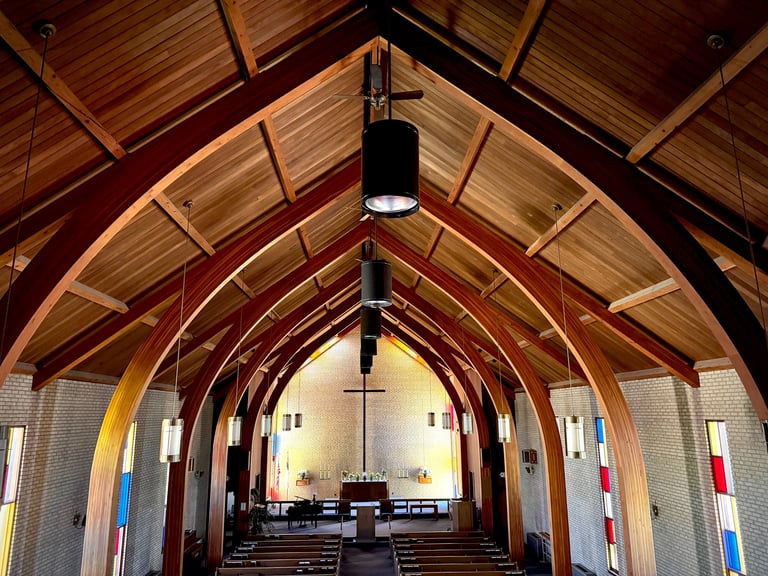
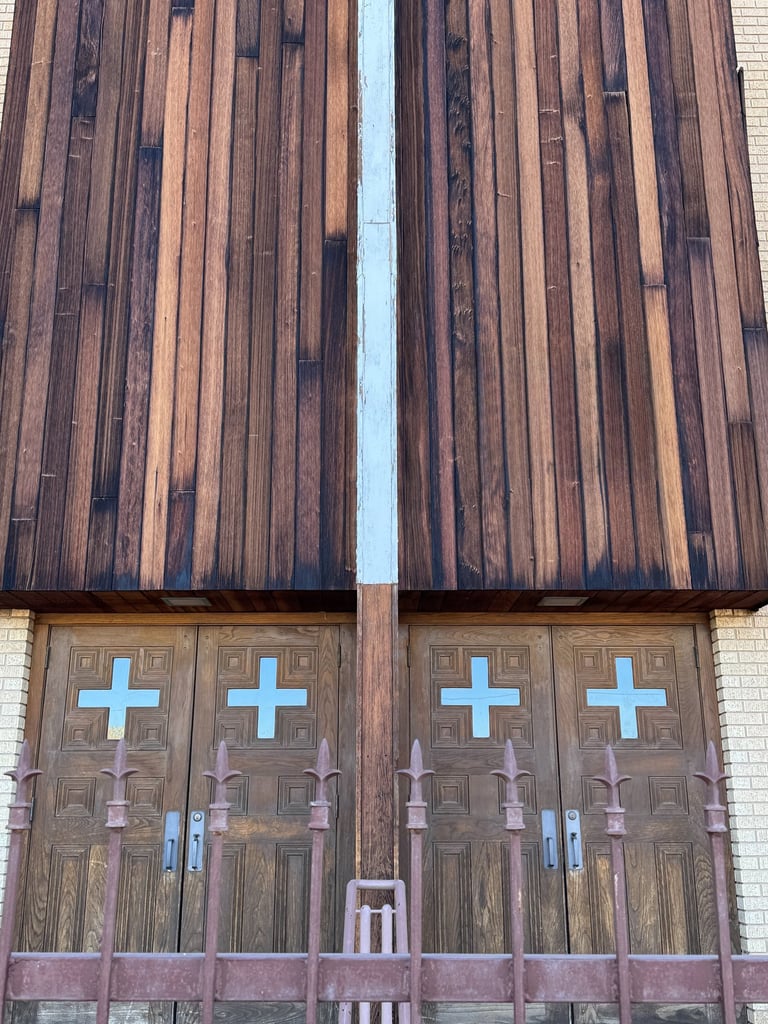
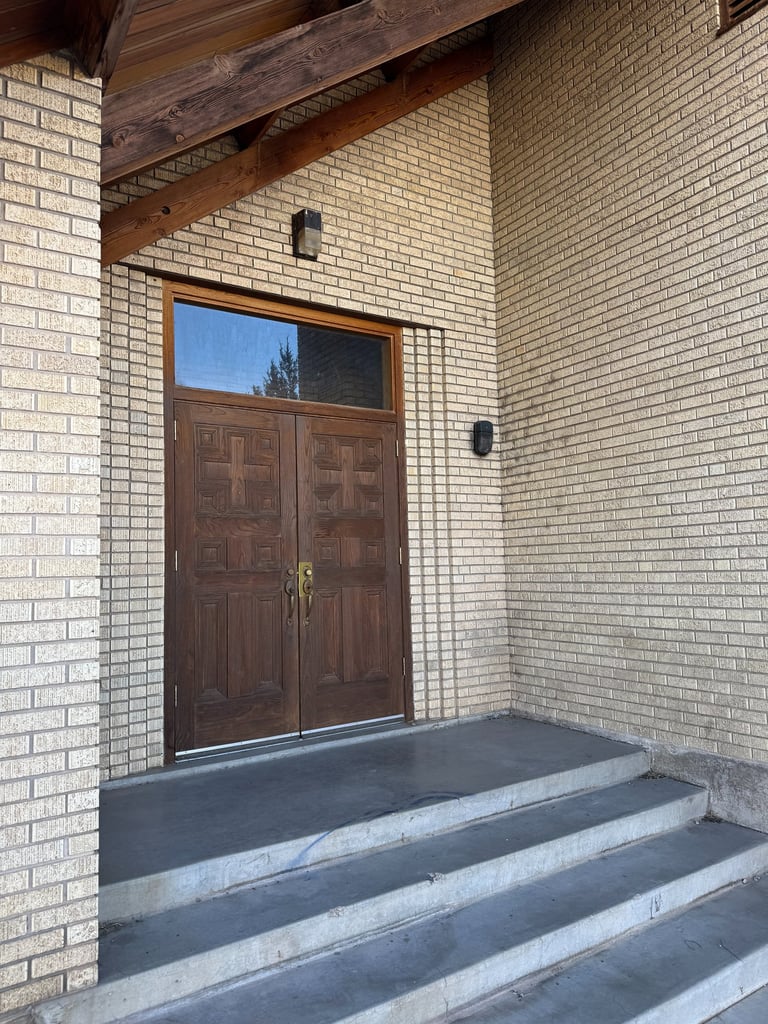
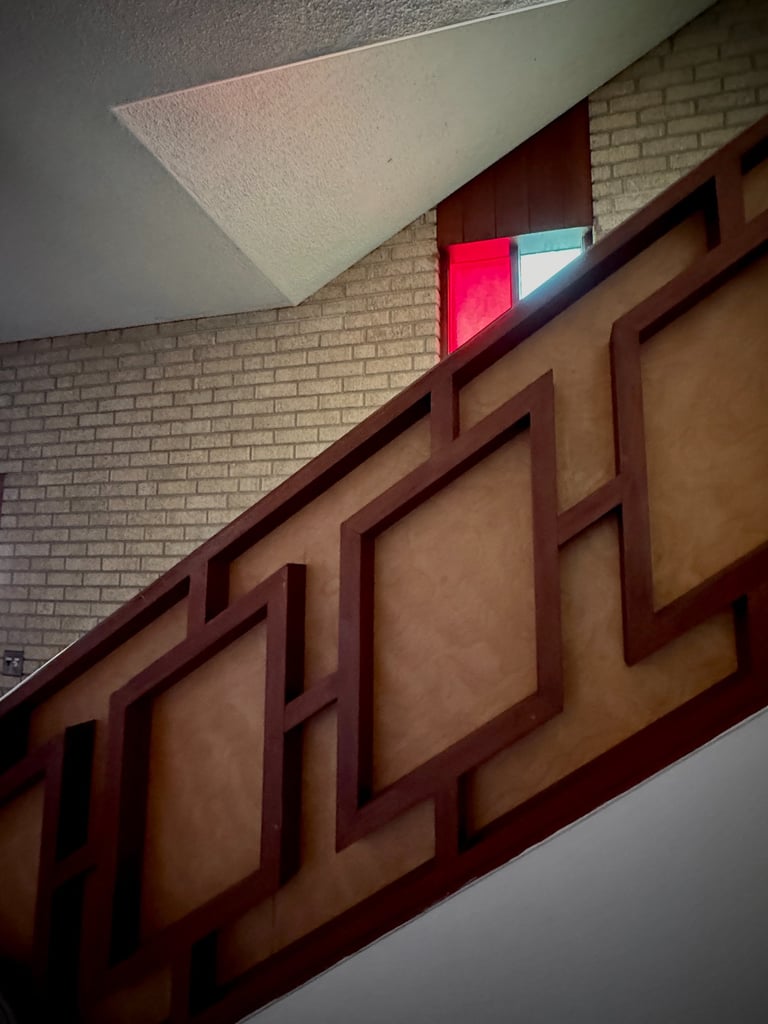
The exterior already hinted at what waited inside: the vertical wood façade above the entrance, the wooden doors, and the wood tower all suggested warmth and texture. But nothing quite prepared me for the abundance of wood within. It filled the foyer, stairwells, sanctuary, balcony, and furnishings, including the pews. I’ve always believed there can never be too much wood, and this building is a beautiful example of that belief.
Most of the doors were sealed shut or protected by security gates, but one set looked promising, and there was a contact number posted on the entrance. I called and reached a gentleman who gave me the name and number of Pastor John, who kindly arranged for someone inside to let me in. A few phone calls, it turns out, can still open doors — sometimes literally.
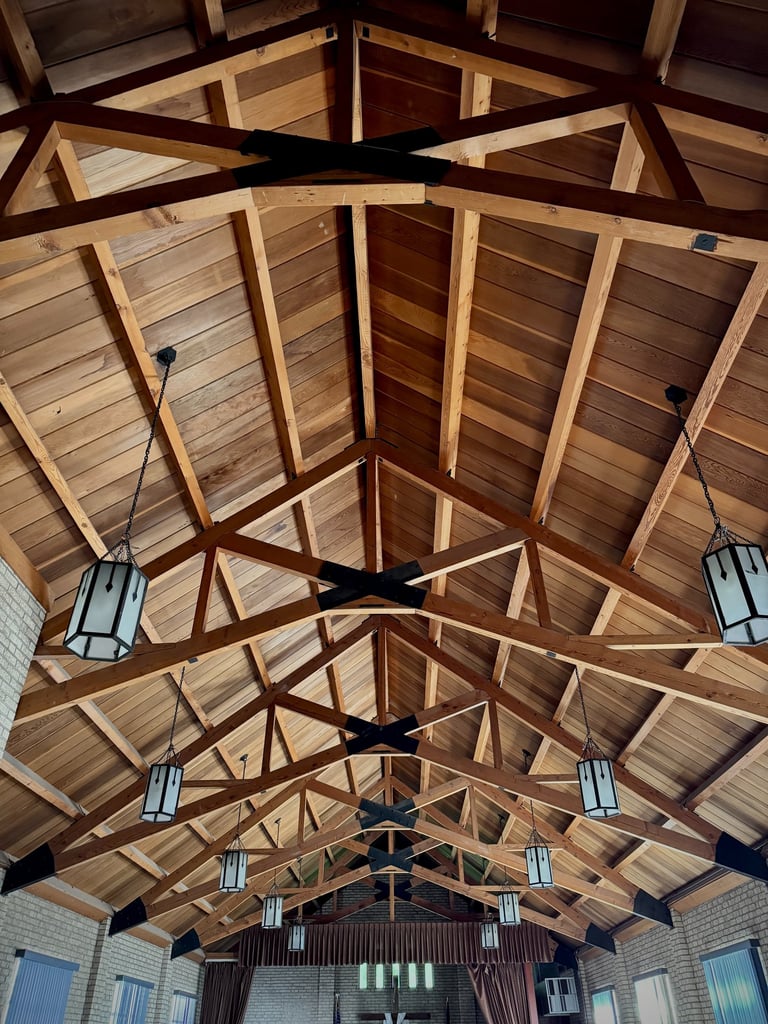
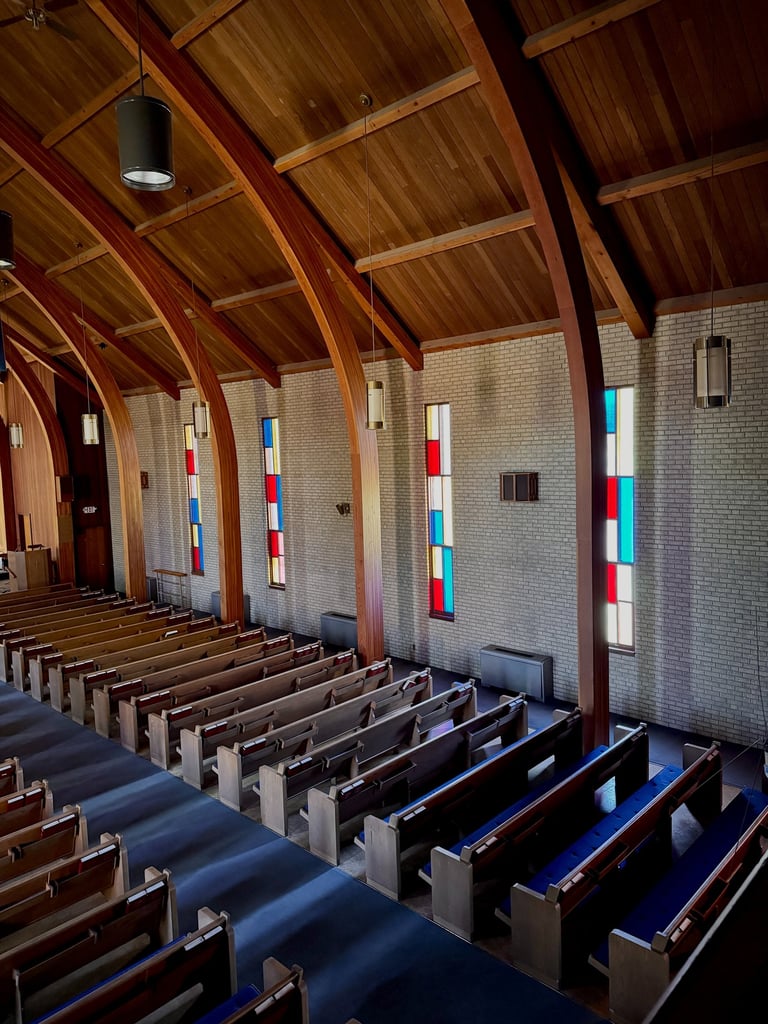
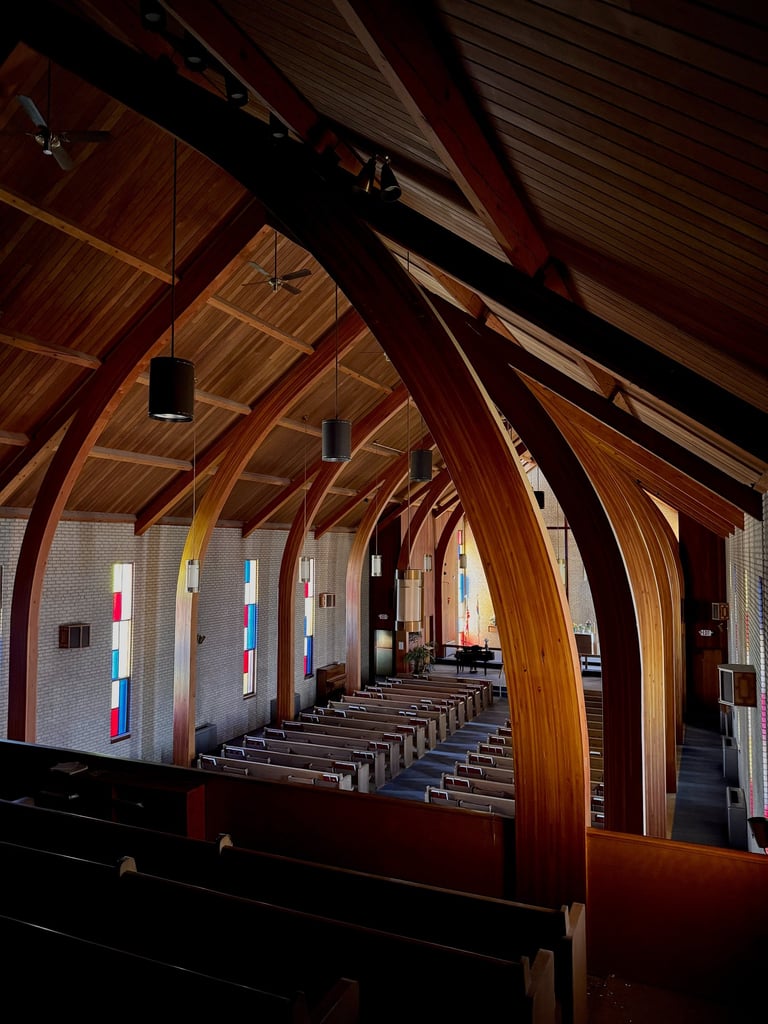
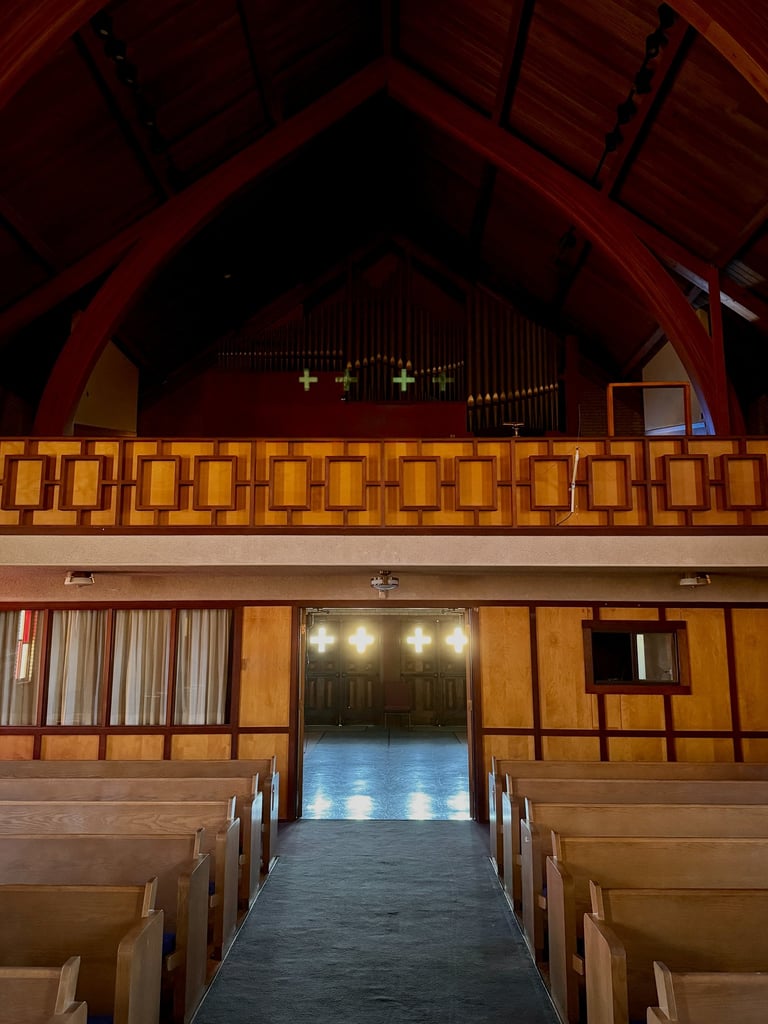
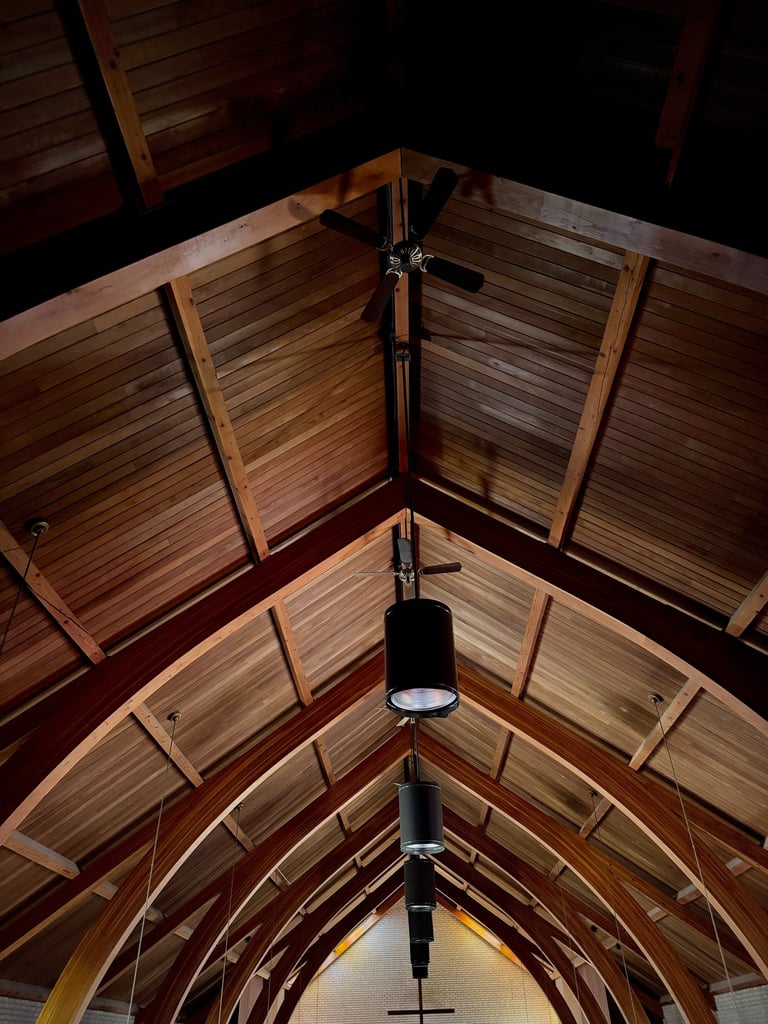
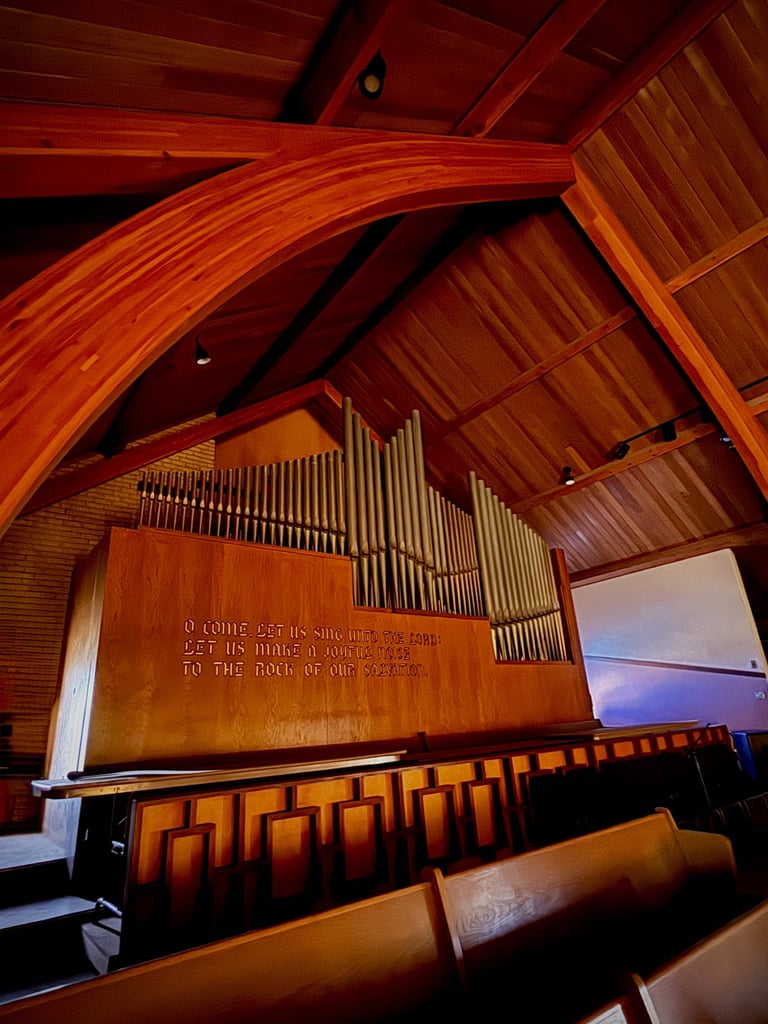
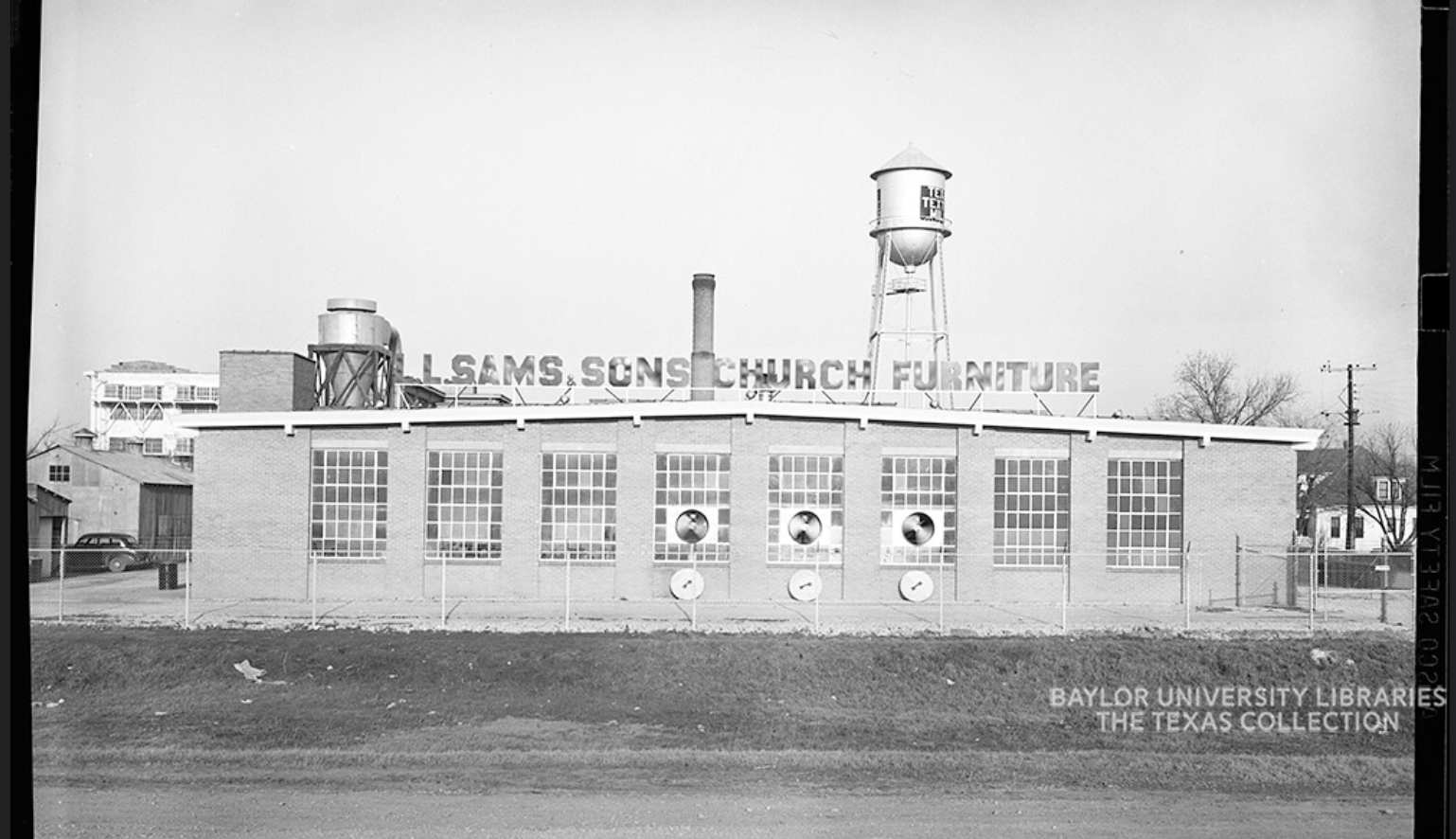
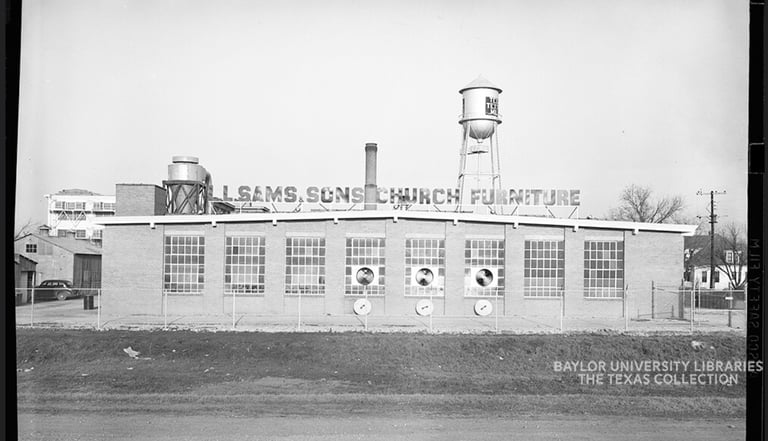
After doing a little more research, I learned that the pews at Redeemer Lutheran Church were crafted by L.L. Sams Company, a family-run furniture maker in Waco, Texas, that began in 1898. What started as a small workshop eventually became a trusted maker of church furnishings across the country, and it feels fitting that these pews found their way to Albuquerque.
Midcentury Details
In addition to the wood and clean lines that recall midcentury modern design, the lighting fixtures throughout the sanctuary and nearby spaces offered another quiet delight. Some have familiar midcentury forms with a subtle cross detail, while others are more purely of the era, with no overt religious marking at all.
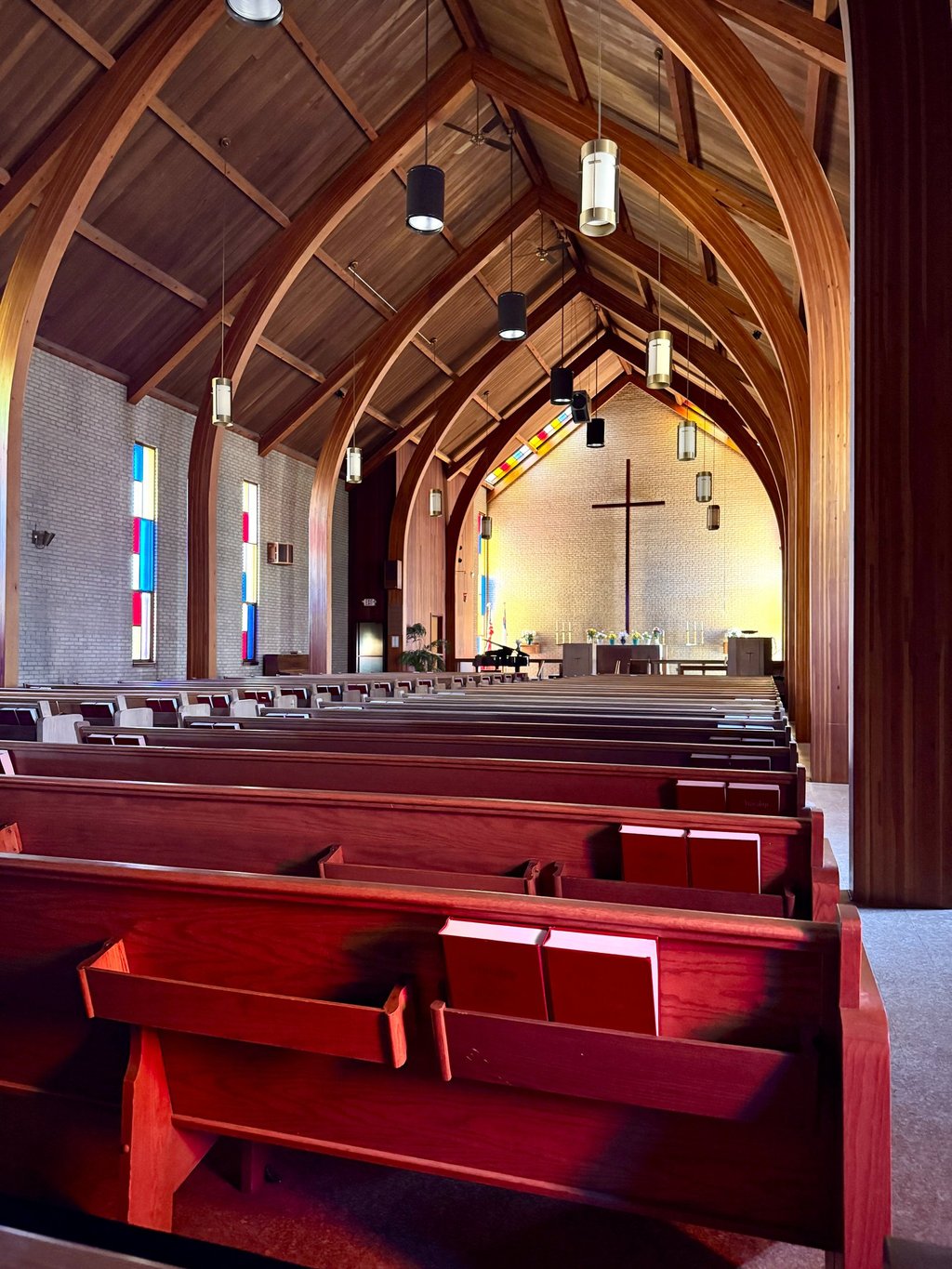
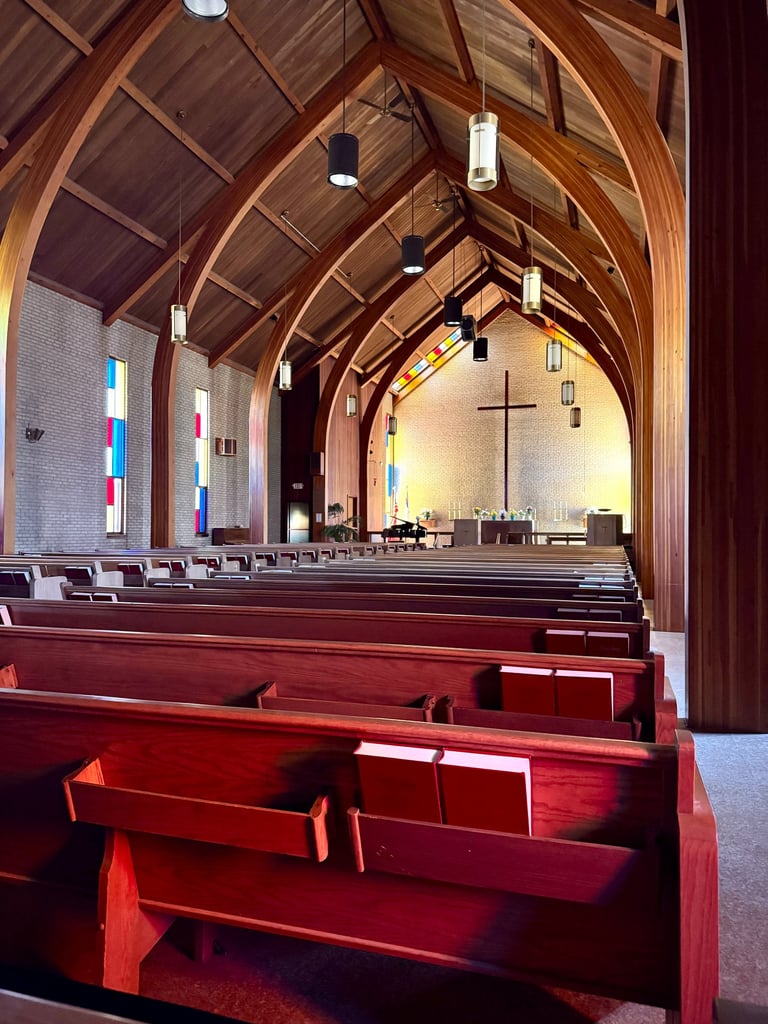
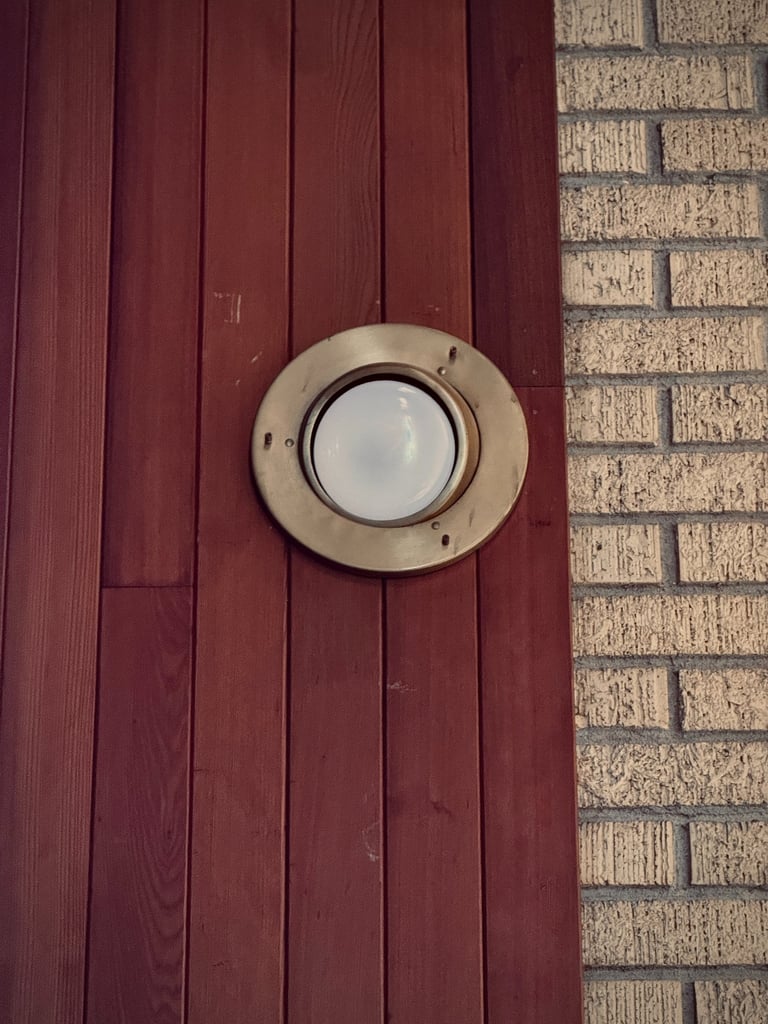
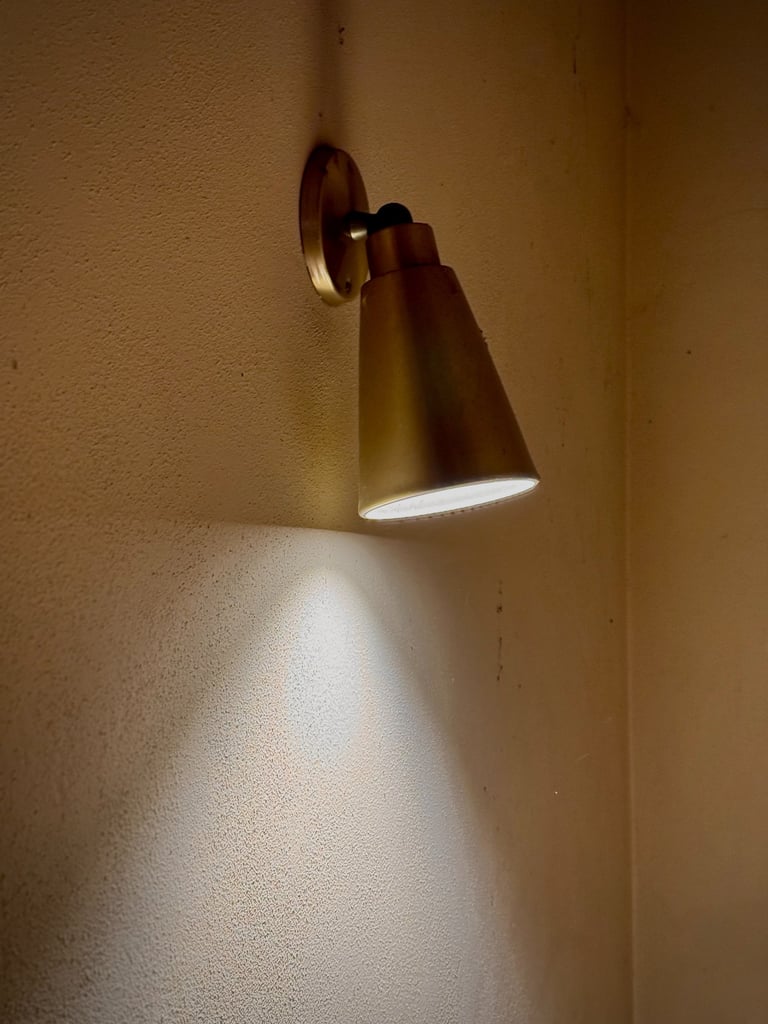
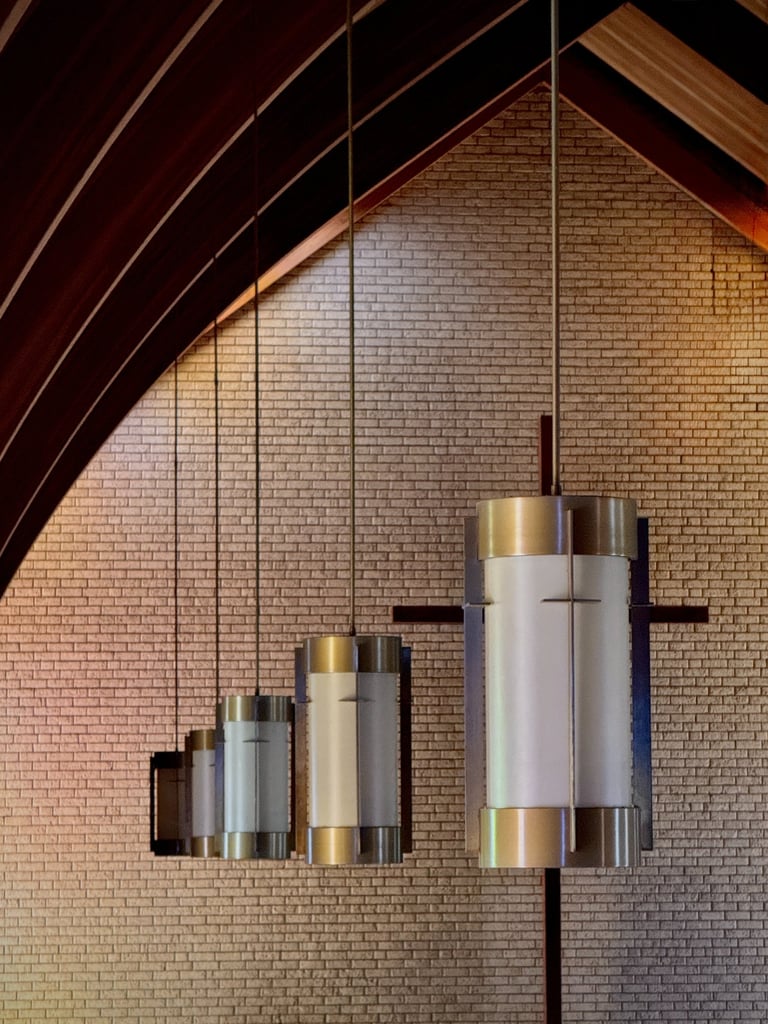
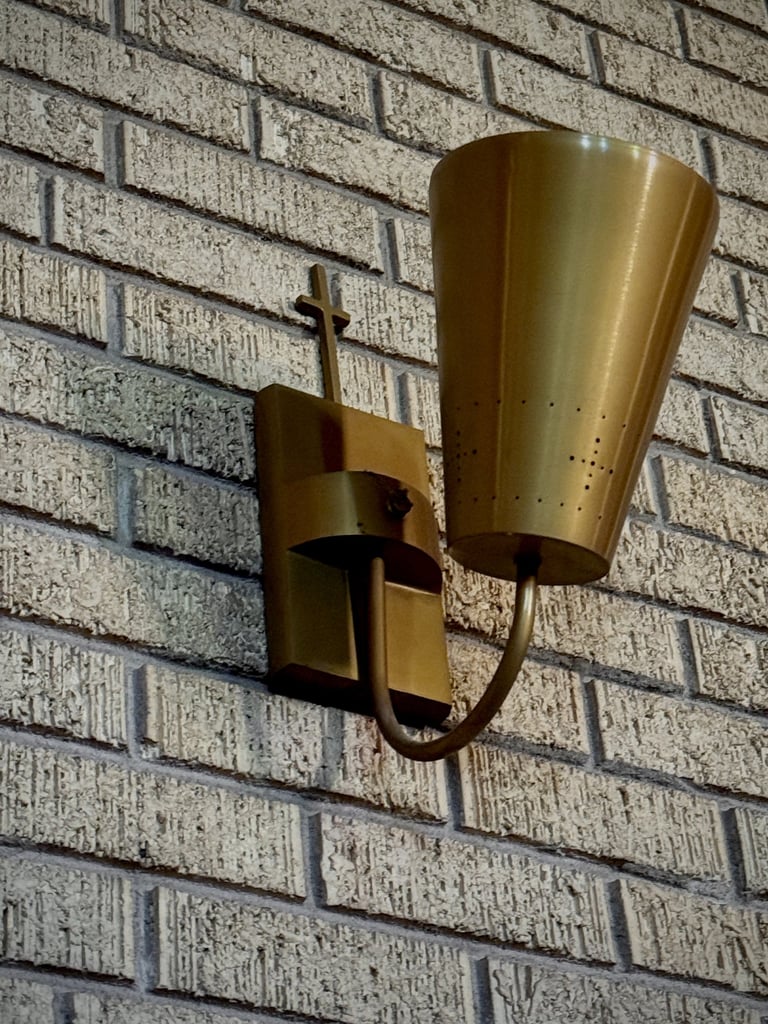
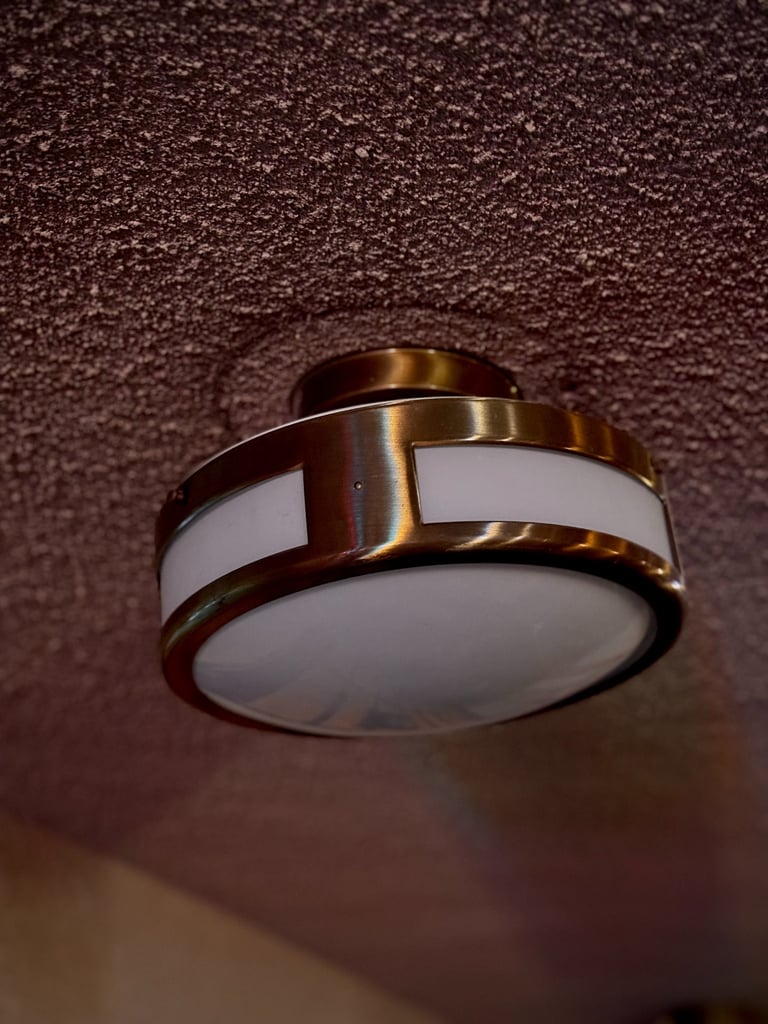
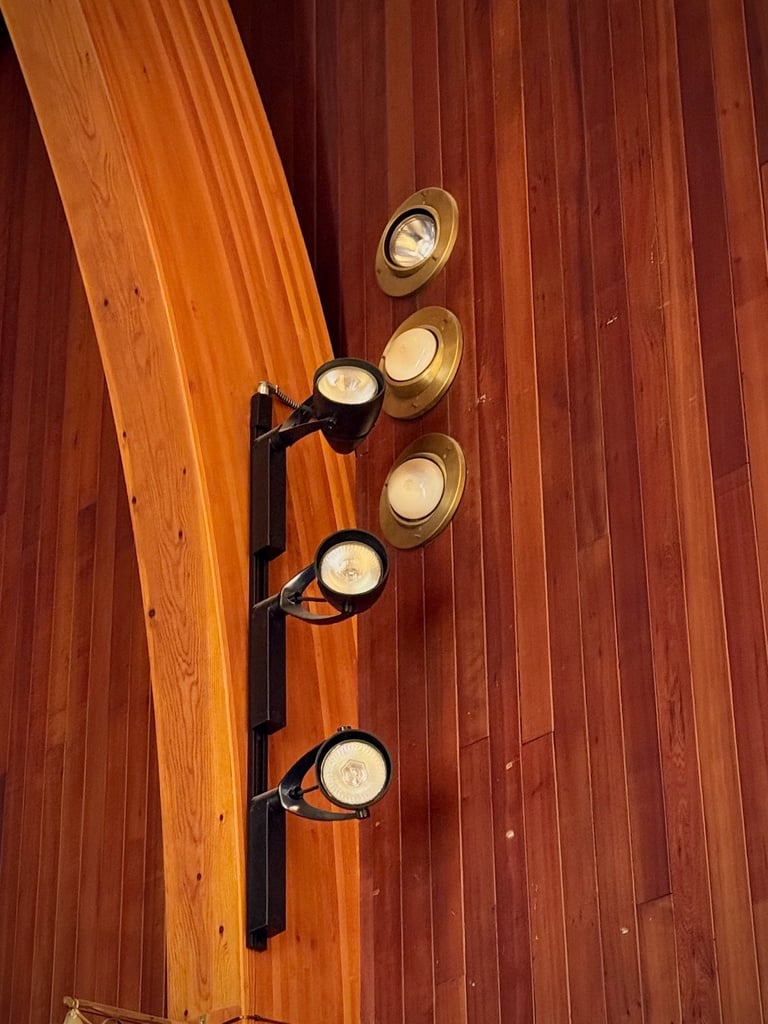
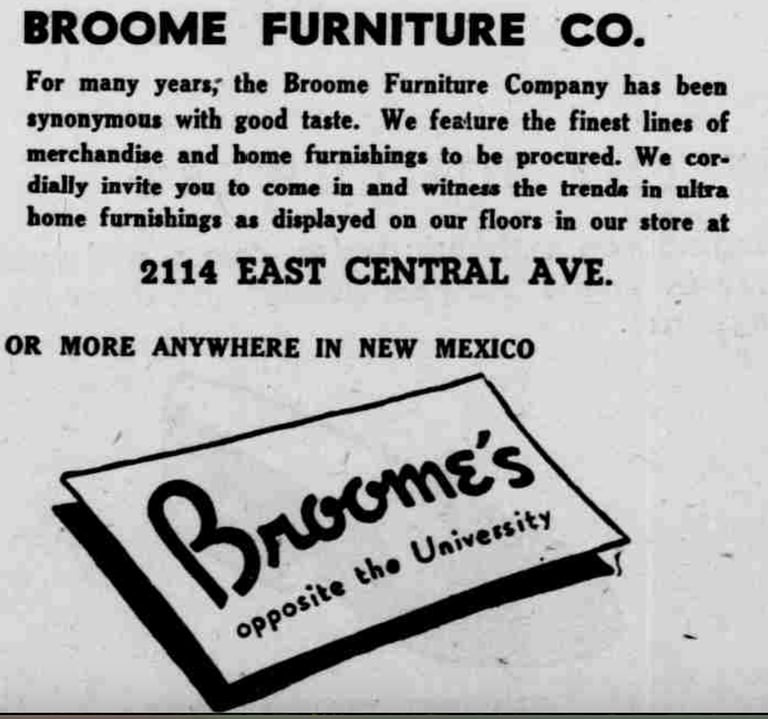
Broome Furniture Company is credited with furnishing the church, so perhaps they also helped source these fixtures. It must have been a privilege to furnish a building like this, one shaped so thoughtfully by light, proportion, and material.
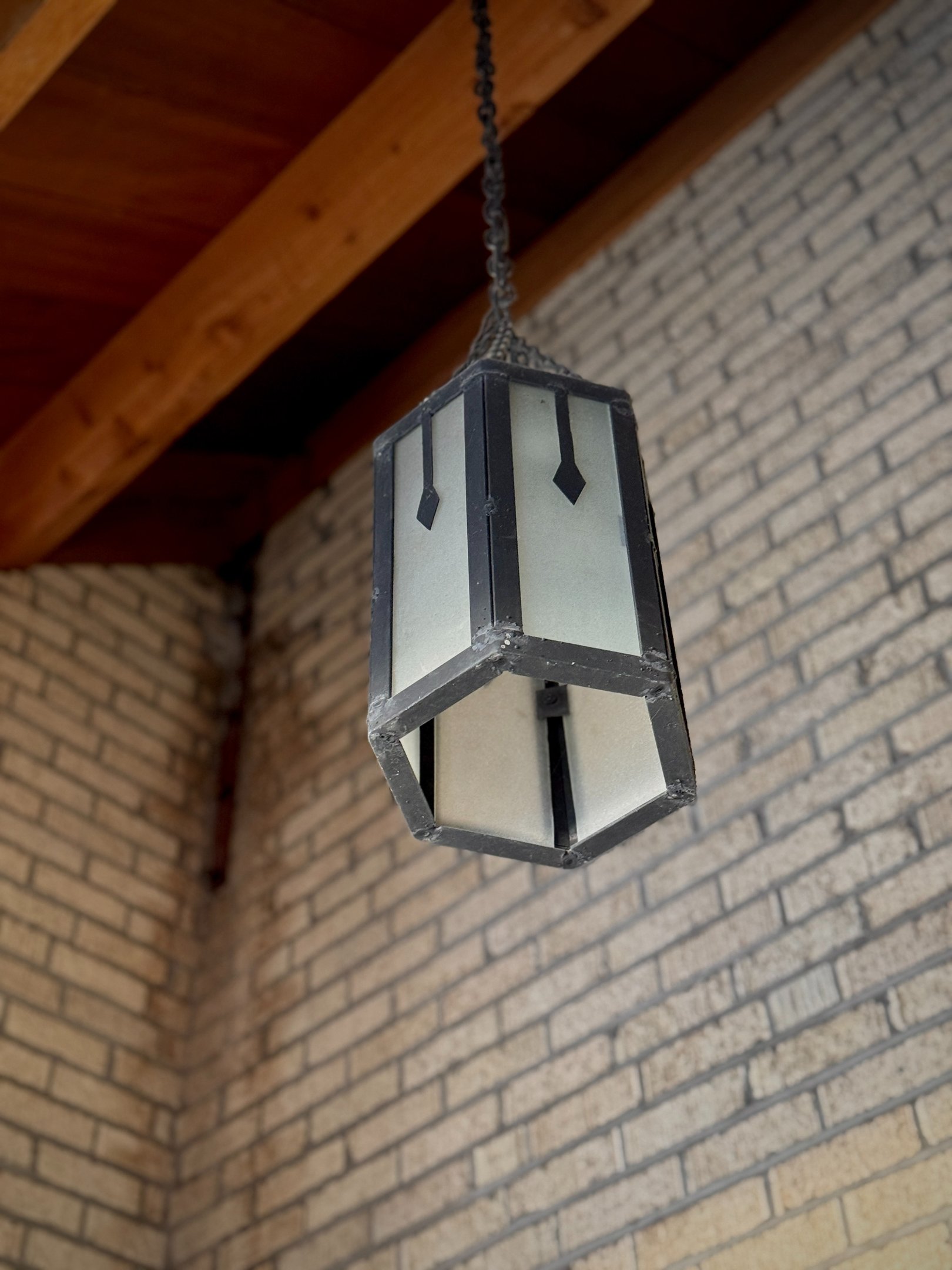
In a smaller sanctuary space, I found black fixtures with more of an art deco feel, and they may be vintage Leonard E. Kord Co. church lights based on an online image search.
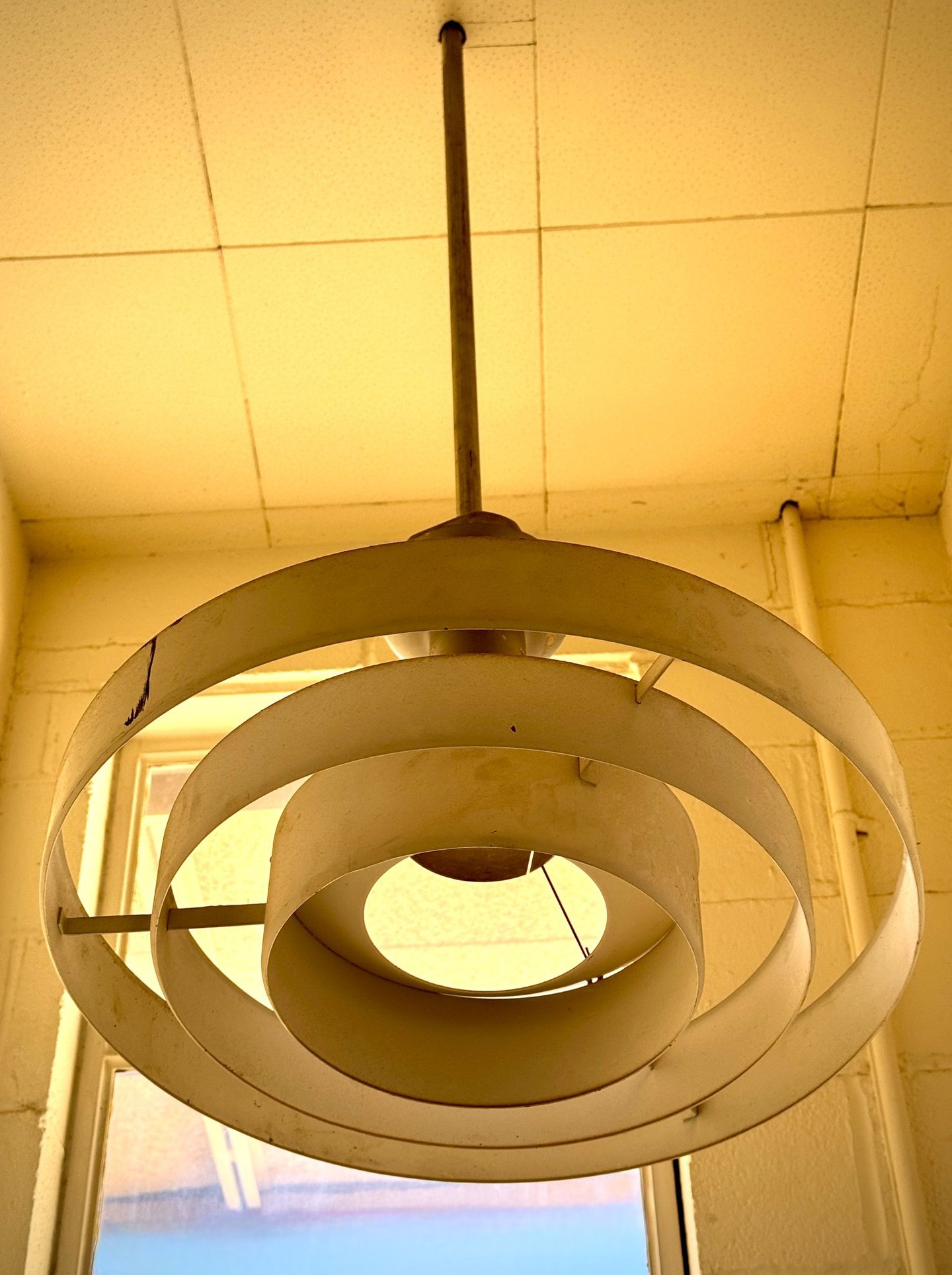
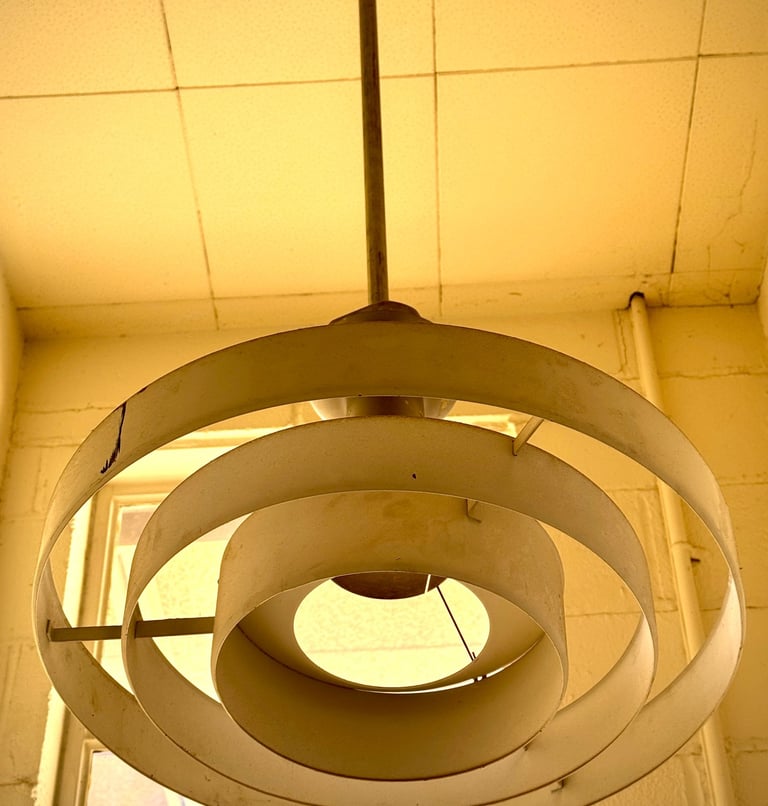
Then, as I leaned partway down a stairwell into the basement, I spotted a space-age little marvel that looked like it could be a vintage Kurt Versen Saturn Ring UFO pendant lamp. Its concentric rings felt wonderfully of its time — a small, unexpected treasure.
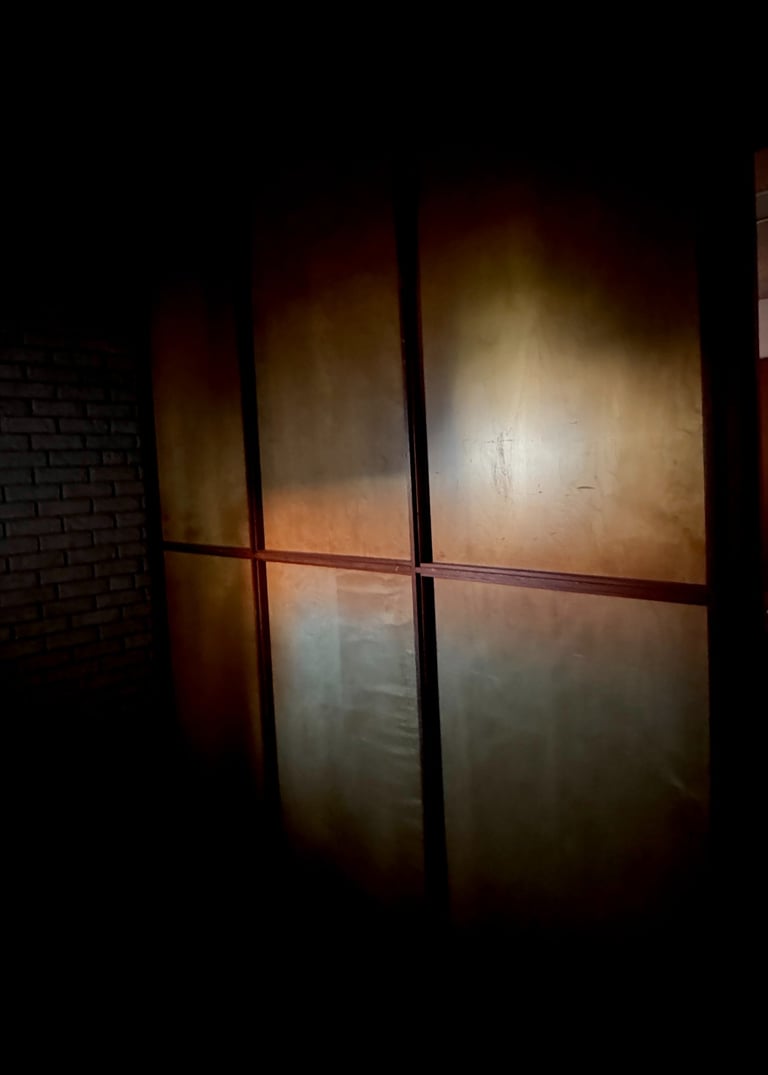
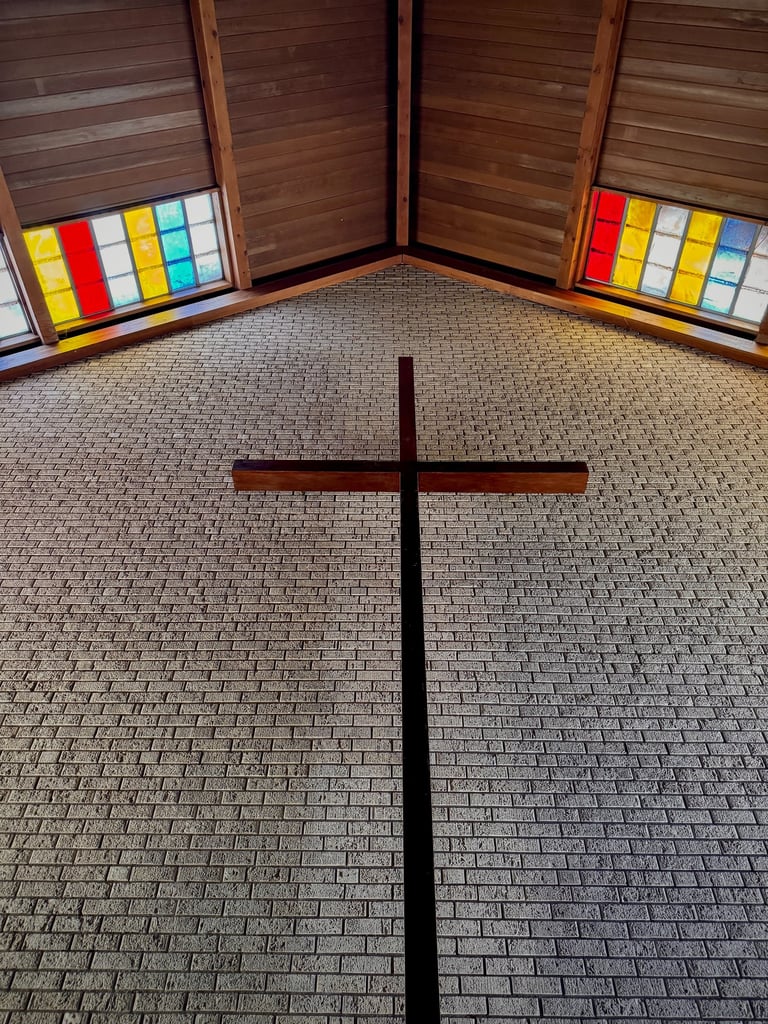
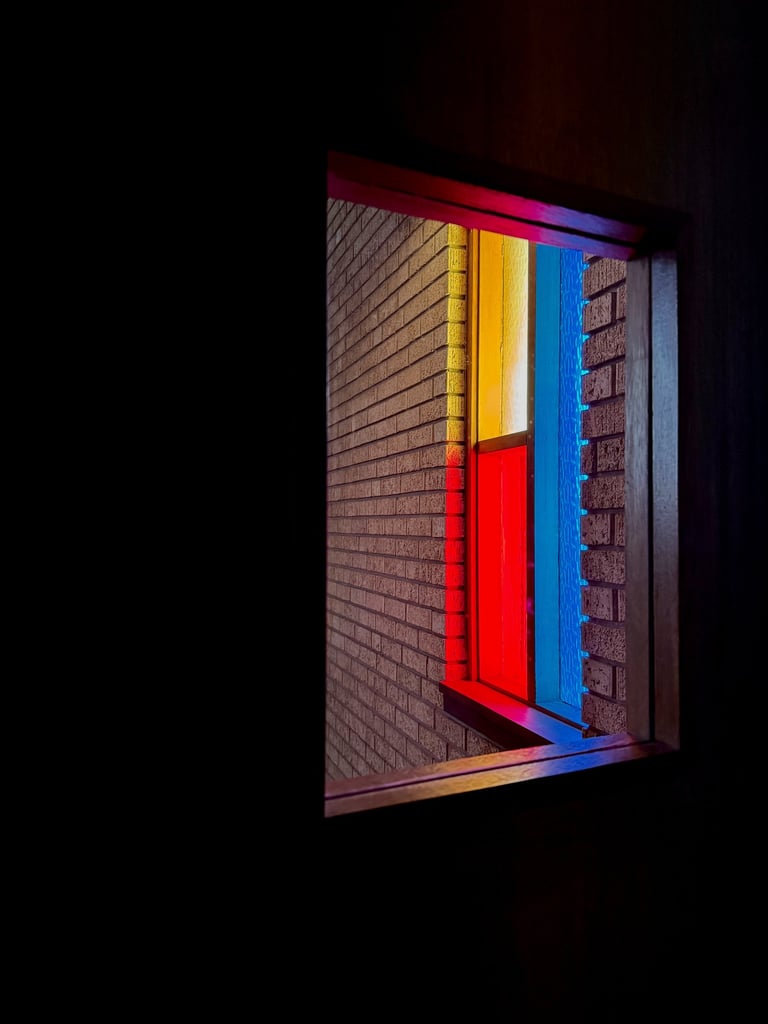
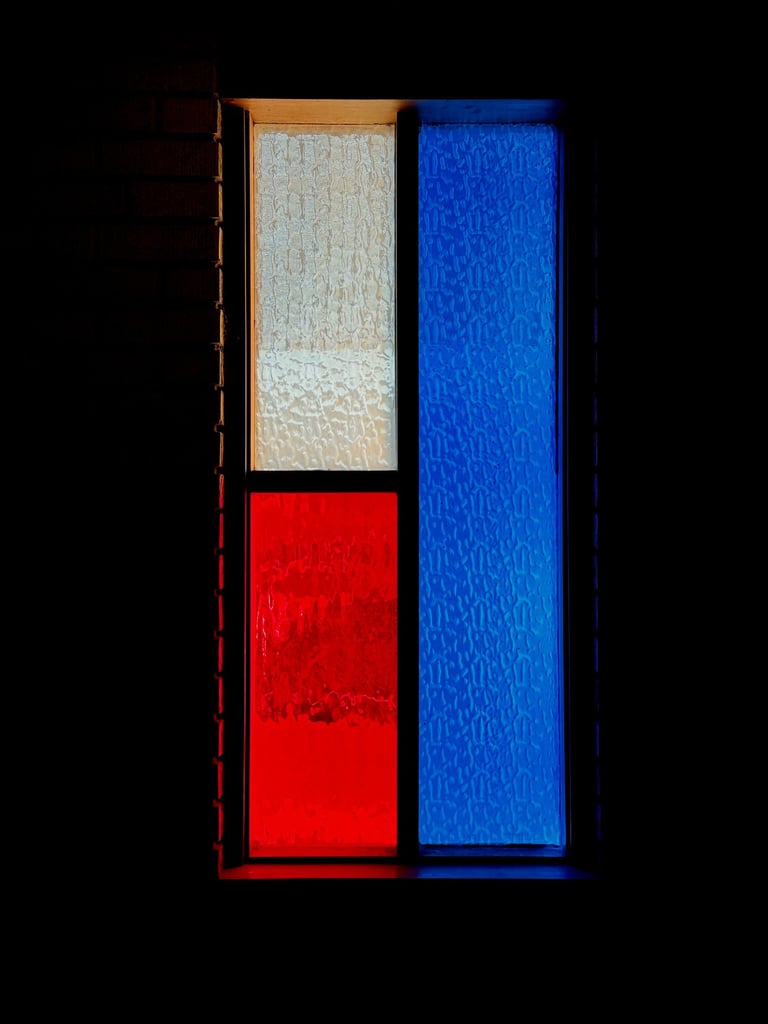
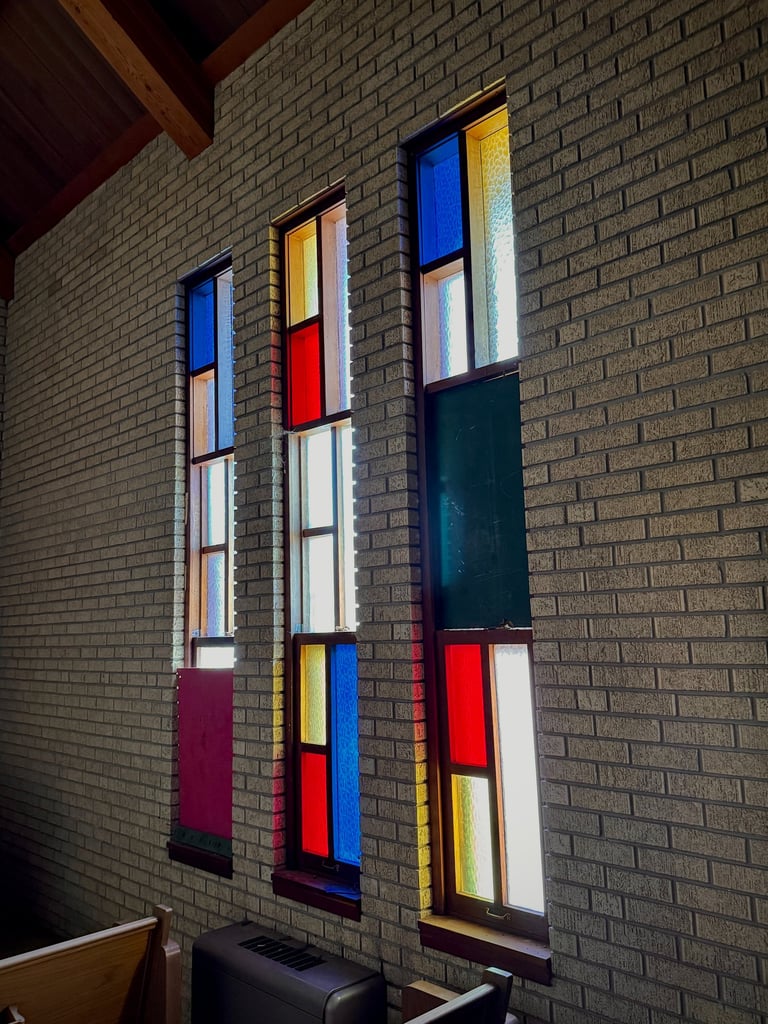
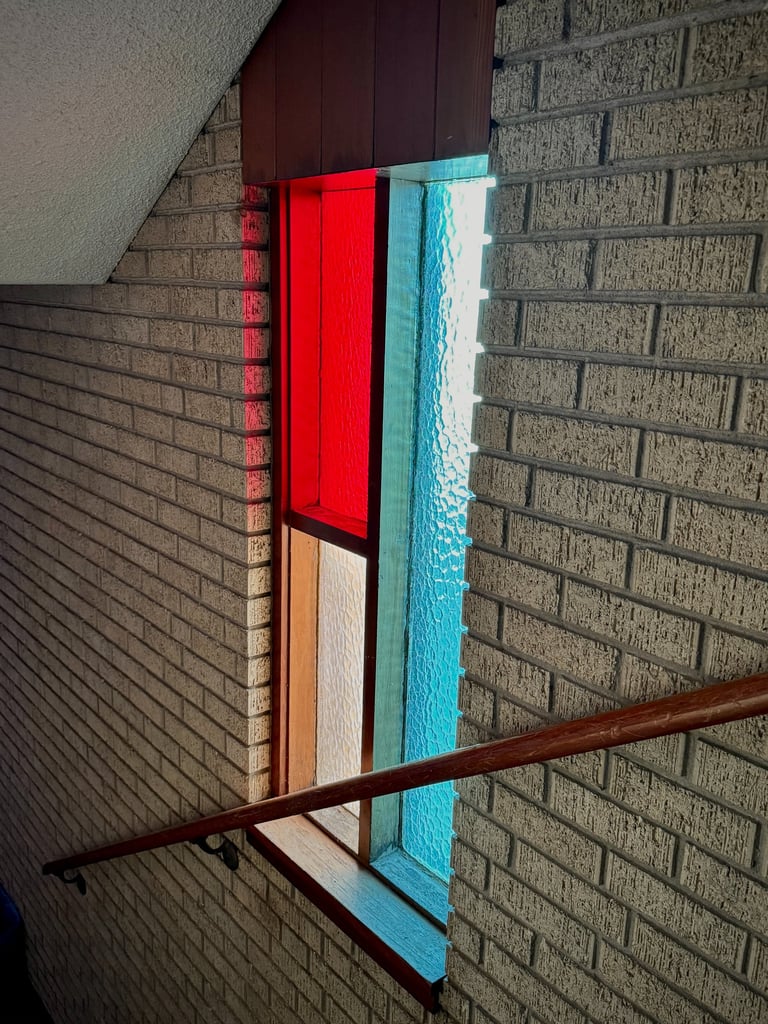
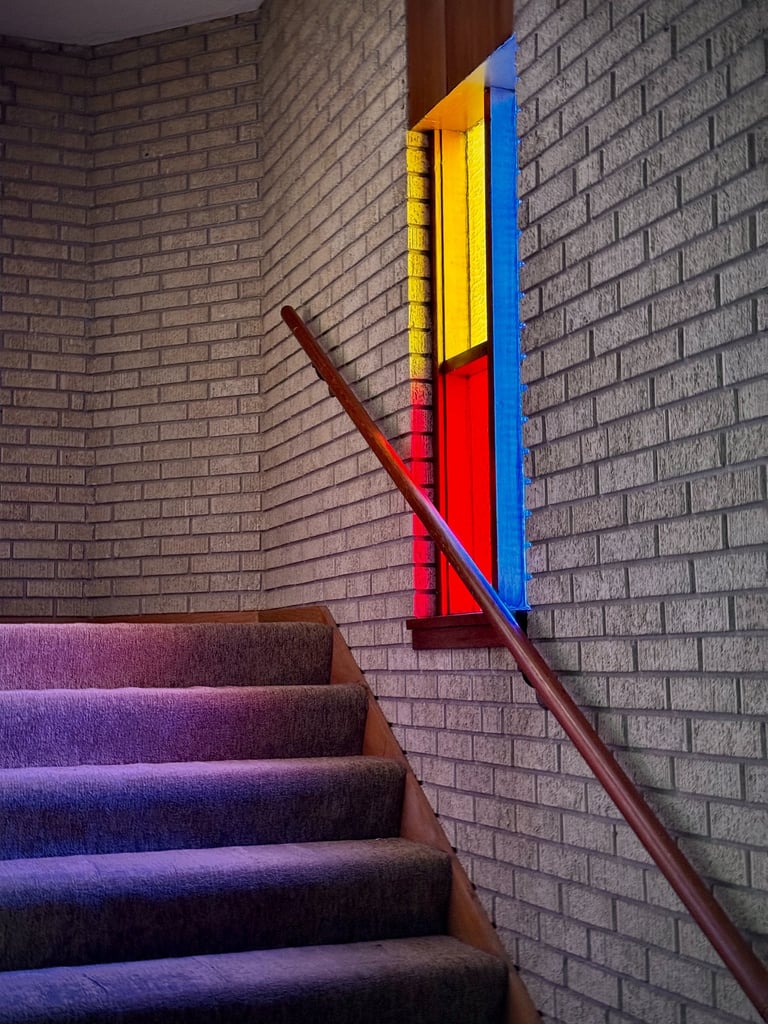
Even the windows, with their stained-glass-like colors and textures, gave the space a soft glow.
Still Standing Strong
I later learned that Redeemer Lutheran Church sold the property in fall 2025 to Westside Baptist Church. It does not appear that regular church services are currently held there, though the basement level does house a small school.
I’m grateful this remarkable piece of architecture — and so many of its original fixtures and furnishings — remains in such good condition nearly 70 years after it was built. The neighborhood around it has changed dramatically since 1958, when it seems to have been a flourishing middle-class area with new housing, parks, schools, shops, theaters, and the steady rhythm of everyday life. Today, the surrounding streets bear the marks of hardship and neglect, but the building itself still stands with quiet grace.
For a moment, I was able to step inside and feel the presence of another Albuquerque — one shaped by optimism, care, and craft. It felt like a gift to witness it.
_________________
Sources:
Albuquerque Tribune: 5/26/1957, 8/8/1957. Albuquerque Journal: 6/26/1957, 11/28/1957, 4/11/1958, 12/9/1958. https://wacohistory.org/items/show/77